Showing posts with label drama. Show all posts

Thursday, January 9, 2025

Book Review: "The Romantic Tragedies of a Drama King" by Harry Trevaldwyn

Thanks so much to Wednesday Books and NetGalley for the complimentary advance copy of this book!

Patrick (call him “Patch”) is ready for an amazing school year. The thing he’s most looking forward to is finding a boyfriend, one whom he can take to Prom. The challenge is, the only openly gay boys in school are dating each other. So what now?

And then two boys arrive at the first drama club meeting of the year. Peter, an American from New York (fabulous) moved to England to live with his best friend Sam’s family. Patch is determined that one of them will be his boyfriend. (He’s fine with either of them.)

The thing is, Patch is full of personality. Maybe too full? He desperately wants to make a good impression on Peter and Sam but mostly winds up tripping over his words and embarrassing himself. The quest to get one of them to be his boyfriend gets more complicated when Sam doesn’t appear to like Patch, and Peter (who is bi) starts dating Tessa, Patch’s former friend and current nemesis.

As Patch tries to negotiate matters of the heart without tripping over himself, he has his devoted best friend Jean to confide in, as well as Ms. Beckett, a former teacher he’s appointed his life coach. He also relies on his mother’s self-help books, but they’re not particularly helpful in his case.

Patch is one of the most hysterically vain and egotistical characters who made me laugh at every turn. (To try and land the lead role in Sweeney Todd, he decided to shadow some barbers, for example.) This is a fun and sweet book about being yourself no matter how wacky and annoying you might be.

The book will publish 1/28.

Saturday, May 18, 2024

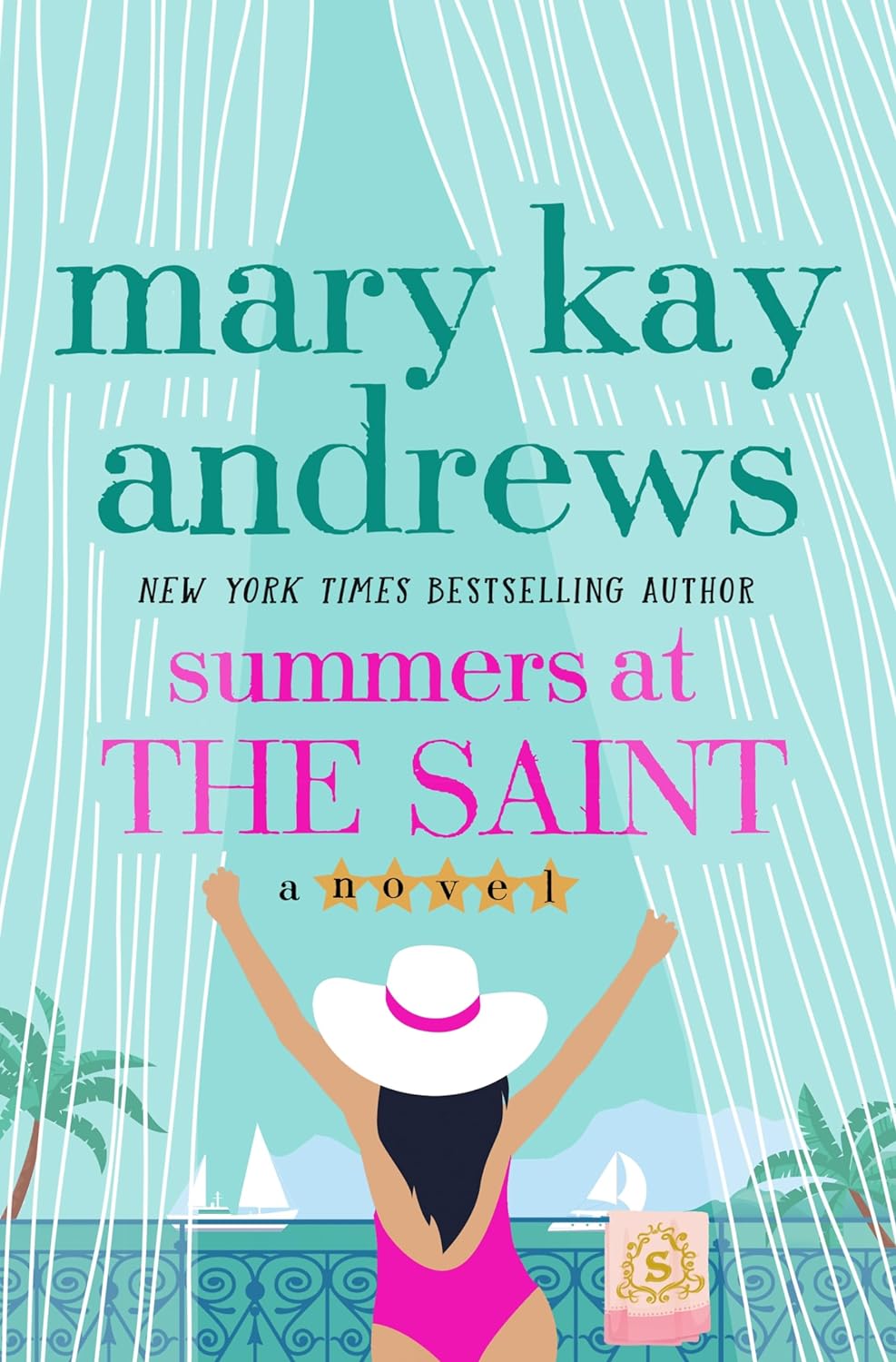
Book Review: "Summers at the Saint" by Mary Kay Andrews

Pack your bags and join Mary Kay Andrews at the St. Cecelia (better known as “The Saint”), a famous resort on the Georgia coast. The Saint has been a haven and a playground for wealthy travelers for decades, and its exclusivity rankles those who can’t afford to stay there.

When Traci first saw the pink building that looked like a fairytale castle, she wanted to go there, but as a local “ain’t,” her kind wasn’t welcome. She was able to land a summer job there for several years, which led to her meeting and marrying one of the heirs to the resort. Now, a widow in her 40s, she’s determined to return The Saint to its glory days, before the pandemic took its toll.

Faced with unprecedented staff shortages, she increases salaries, provides housing for employees, and recruits new staff, including the daughter of her former best friend, who worked with Traci years ago before ending their friendship. Traci even convinces her niece to abandon her study-abroad plans and work at The Saint for the summer.

What Traci doesn’t fully grasp is how the deck is stacked against her. She has to deal with the machinations of her brother-in-law, who wants nothing more than to wrest The Saint from her hands. And it turns out there’s a lot of nefarious goings-on behind the scenes, which threaten to take the resort down for good. When a member of the staff is killed, and someone comes looking for answers about an incident at the hotel years ago, Traci realizes she can only depend on herself—and maybe one or two others.

There’s no shortage of family dysfunction, drama, people behaving badly, even murder and violence. Who’s responsible for the chaos that has broken out, and why? Can Traci turn things around at The Saint before she winds up in danger—and/or loses a place that reminds her of her late husband?

Andrews knows how to tell a story and paint an evocative scene, and this hooked me from start to finish. It's definitely a little darker than many of her books. There’s suspense, romance, intrigue, grief, even rehashing old memories. I definitely enjoyed my time at The Saint!

Tuesday, January 10, 2023

Book Review: "The Villa" by Rachel Hawkins

This book had me wanting to go to Italy on the next available flight!

You’ve probably been seeing this everywhere on Bookstagram. I know I have been anticipating this for a while, as I’m definitely a fan of Hawkins’ books.

Emily has been having a tough time lately. Her marriage has fallen apart, her health has been shaky, and she’s way overdue on delivering her 10th cozy mystery. And then there’s her childhood best friend Chess, who is creating an empire out of her self-help books, and is even pals with Oprah.

Chess suggests Emily join her on a six-week stint in Italy. She’s rented a famous villa in Orvieto which was the scene of a notorious murder of an up-and-coming musician. The night of the murder and the events surrounding it inspired both a famous horror novel written by the victim’s girlfriend, and a quintessential 1970s album written by her stepsister.

The beautiful setting does inspire Emily but it also magnifies some of the difficulties in her relationship with Chess. And as Emily becomes more obsessed with the murder and figuring out what truly happened, she realizes that there are secrets and mysteries in her own life that need solving—and they could prove dangerous.

This really never caught my interest completely. It’s not a thriller or even a mystery, but more of a drama, and while one twist actually was a bit surprising, another I predicted within the first few pages.

Many others have loved this, so maybe it’s just me.

Wednesday, February 2, 2022

Book Review: "Secrets of Our House" by Rea Frey

If you love domestic drama, Rea Frey's upcoming novel, Secrets of Our House is one for you!

Desi has finally achieved her dream of a beautiful getaway home in the mountains of North Carolina. She plans some time away with her husband, Peter, and their 18-year-old daughter, Jules. She’s hoping this will be the opportunity they need to rebuild their marriage before Jules heads off to college at Columbia.

The thing is, nothing is quite what it seems. Jules is in love with a local boy, Will, and doesn’t want to go away to school—in fact she never did. And while Desi wants to rebuild her marriage, she’s not really looking be with Peter, as she’s in love with someone else.

And that’s just the tip of the iceberg. There are secrets and lies galore, all ripe for the picking. Some things are obvious if you’ve watched a Lifetime Movie or two, but Frey’s storytelling keeps you hooked, even if the characters may annoy you a bit. I needed to know what was going to happen and if my suspicions were correct.

This is the second of Frey’s books I’ve read and she’s really a compelling writer. I don’t think this is necessarily a mystery or a thriller as it's been marketed; it's just a good, hearty, domestic drama, but if you like this genre, you’ll be hooked.

Thanks to Suzy Approved Book Tours, Rea Frey, and St. Martin's Griffin for inviting me on the tour and providing me a complimentary advance copy of the book in exchange for an unbiased review!!

Secrets of Our House publishes 2/8/22.

Saturday, May 29, 2021

Book Review: "Take Me Home Tonight" by Morgan Matson

In Take Me Home Tonight, Morgan Matson's new YA novel, when two best friends sneak out for a night in NYC, they get an evening they never imagined.

Kat and Stevie are best friends. They couldn’t be more different from each other in many ways, but they’re both theater kids, and their lives often revolve around the fall play and the spring musical. And they mostly tell each other everything. Right?

When Stevie’s plans to celebrate her 18th birthday in NYC fall apart, Kat decides that they should go into the city anyway. They’ll go see a play, go to the restaurant Stevie was supposed to, and have an incredible time. (Of course, Kat has an ulterior motive beyond doing something nice for her friend, but whatevs.)

So they sneak into NYC (their parents would never let them go to the city alone on a Friday night) and get ready for a memorable night. And that’s what they get, complete with family drama, a dog that likes to wander, broken phones, and even the possibility of romance. At the same time, they’ll have to confront their fears about the future and explore the rough spots in their friendship.

I grew up about an hour outside of NYC so I love stories that take place there, and as a theater kid, I stan books about them. This was a cute story, balancing serious and silly (there’s an awesome joke about Paul Rudd, whom I’m obsessed with). The characters aren’t perfect—Kat, in particular, is fairly ridiculous—but there is growth in their arcs.

While there definitely were some coincidences and situations that made me say “Really?”, the one thing that didn’t work for me in Take Me Home Tonight was a secondary plot line involving the girls’ other best friend, Teri. If it had been removed, I don’t the book would have missed it.

Having been a YA fan for so long I can’t believe this is my first Morgan Matson book, but I’ll definitely remedy that!!

Saturday, January 18, 2020

The Best Movies of the Decade...


For those of you who wonder if I do anything other than read, the answer is a resounding, "yes." As many of you know, I also go to the movies a lot, particularly as it gets closer to the end of the year and the films and performances being touted as potential Oscar nominees. Some years I don't see as many movies as I'd like, but some years I've had lots of chances.

Like I did in 2010 for the 2000s, I went through all of the movies I've seen and made a list of my top 50 movies of the 2010s. Boy, it wasn't easy, as there were a lot of movies that still resonate with me, some years after I've seen them.

I'll admit that once I got past the top 25 or so, ranking the movies became even more difficult, so the rankings are fairly arbitrary. I don't know that I necessarily loved movie #37 more than movie #40, but this is what happens when you do a list like this!

So, without further ado, here's my list. Feedback is always welcome (and appreciated). I'm sure I missed something major. For each movie, the title is linked to its IMDB profile in case you've never heard of it.

  1. Fruitvale Station (2013): Tore my heart out, made me angry, and made me think. Still does all these years later. Starring Michael B. Jordan, Melonie Diaz, and Octavia Spencer; directed by Ryan Coogler.

  2. Inception (2010): I still can't quite get this wild movie about dream-sharing technology and thought manipulation out of my head. Starring Leonardo DiCaprio, Joseph Gordon-Levitt, Ellen Page, and Marion Cotillard; directed by Christopher Nolan.

  3. La La Land (2016): Go ahead, roll your eyes at me all you want. I fell head over heels for this love story between an aspiring actress and a musician, and loved every minute of its classic-musical feel. Starring Ryan Gosling and Emma Stone; directed by Damien Chazelle.

  4. The Perks of Being a Wallflower (2012): Terrific movie adaptation of one of my favorite books, this movie hit me right in the feels. Starring Logan Lerman, Emma Watson, and Ezra Miller; directed by Stephen Chbosky (who wrote the book).

  5. Her (2013): A lonely man gets a little too attached to his phone's new operating system. Astute commentary on our ability to connect. Starring Joaquin Phoenix, Amy Adams, and Scarlett Johansson; directed by Spike Jonze.

  6. Hugo (2011): An orphan living in a Paris train station in the 1930s tries to solve a mystery involving his late father and an automaton. A love letter to the movies. Starring Asa Butterfield and Chloë Grace Moretz; directed by Martin Scorsese.

  7. Call Me by Your Name (2017): Sexy, romantic, and poignant, this is proof positive you never quite get over your first love. Great adaptation of Andre Aciman's terrific book. Starring Timothée Chalamet and Armie Hammer; directed by Luca Guadagnino.

  8. Black Panther (2018): The only MCU movie on this list, this movie worked for me at every level and still feels joyful and exciting after many, many viewings. Still think it should've won Best Picture last year. Starring Chadwick Boseman, Michael B. Jordan, and Lupita Nyong'o; directed by Ryan Coogler.

  9. Moonrise Kingdom (2012): A young boy and girl fall in love and decide to run away from home, which causes their entire town to form a search party and try to find them. Trademark Wes Anderson quirk with so much heart. Starring Jared Gilman, Kara Hayward, and Bruce Willis; directed by Wes Anderson.
  10. Boyhood (2014): A triumph of filmmaking (the same cast was filmed over 12 years) and a quietly special, memorable film in and of itself. Starring Ellar Coltrane, Patricia Arquette, and Ethan Hawke; directed by Richard Linklater.

Monday, January 21, 2019

Oscar Nominations: What I Think Will Happen


Those of you who know me well know that I've been fairly obsessed with the Oscars for years now. We do our best each year to see every movie and performance nominated for the major awards, and thanks to my ridiculous trivia-laden brain, I can tell you everyone nominated for Best Actor, Actress, Supporting Actor, Supporting Actress, and Director, as well as all of the movies nominated for Best Picture, since the Oscars started in 1927. (It's a super-useful skill on the open market.)

Tomorrow morning at around 8:37 a.m. ET this year's Oscar nominations will be announced. As I've done for a number of years, I am listing my predictions of what I think will get nominated for the major categories (along with some analysis of what I wish would happen), and then tomorrow I'll see how I did.

So, here goes!

Best Picture
Black Panther
BlacKkKlansman
Bohemian Rhapsody
The Favourite
Green Book
Roma
A Star Is Born
Vice


Analysis: Every year since 2009 there has been a variable number of Best Picture nominees. Some years there are seven, eight, nine, even ten. No one knows how many there will be because of the way Best Picture nominees are voted for. I'm picking eight—if the Academy goes with one more I think it will be either If Beale Street Could Talk or First Man (which I loved); First Reformed, Mary Poppins Returns, or Crazy Rich Asians could surprise as well.


Best Actor
Christian Bale, Vice
Bradley Cooper, A Star Is Born
Rami Malek, Bohemian Rhapsody
Viggo Mortensen, Green Book
John David Washington, BlacKkKlansman

Analysis: If I had my picks, I'd have Lucas Hedges for Boy Erased and/or Ethan Hawke for First Reformed in there. While sadly, Hedges doesn't have a chance this year (and he also turned in another award-worthy performance in Ben is Back), Hawke could sneak in and replace Washington (Hawke has won more film critics' awards than any other actor). There's also a chance that Willem Dafoe could get a nod for his performance as Vincent Van Gogh in At Eternity's Gate.(Sadly, two other really strong performances—Ryan Gosling in First Man and Robert Redford for The Old Man and the Gun—don't even make the discussion.)


Best Actress
Yalitzia Aparicio, Roma
Glenn Close, The Wife
Olivia Colman, The Favourite
Lady Gaga, A Star Is Born
Melissa McCarthy, Can You Ever Forgive Me?

Analysis: While I believe that Close, Colman, Gaga, and McCarthy have their slots sewn up, that fifth one is anyone's guess. I'm betting Aparicio will ride a huge wave for Roma tomorrow, but other possibilities are Emily Blunt for Mary Poppins Returns, Viola Davis for Widows, Nicole Kidman for Destroyer, and critical favorite Toni Colette for Hereditary. (If everything was fair, Julia Roberts would get a nomination for her fantastic performance in Ben is Back, and Charlize Theron deserves a nod for Tully, but comedies never fare well.)


Best Supporting Actor
Mahershala Ali, Green Book
Timothee Chalamet, Beautiful Boy
Adam Driver, BlacKkKlansman
Sam Elliott, A Star Is Born
Richard E. Grant, Can You Ever Forgive Me?

Analysis: One of the things that will make me so happy tomorrow is if Sam Elliott finally gets his first Oscar nomination after a long career. However, I think he's the one with the best chance of being left off the list, too, in favor of last year's winner, Sam Rockwell, for Vice. (It's also possible that Chalamet, who received Golden Globe and SAG nominations, could be overlooked instead. If The Favourite leads the nominations tomorrow, Nicholas Hoult could also sneak in.


Best Supporting Actress
Amy Adams, Vice
Emily Blunt, A Quiet Place
Regina King, If Beale Street Could Talk
Emma Stone, The Favourite
Rachel Weisz, The Favourite

Analysis: I really, really, really want Claire Foy to be nominated for First Man. I'm hoping she gets in over Blunt, who was the female lead (I hate when leading performances get nominated for supporting awards). I'd also like to see Nicole Kidman get nominated for Boy Erased, but that seems unlikely, as does my sentimental favorite, Michelle Yeoh, for Crazy Rich Asians. While King really should be the favorite for this award, there's an outside chance she could get passed over, like she did for the SAGs, although I doubt that will happen.


Best Director
Bradley Cooper, A Star Is Born
Alfonso Cuaron, Roma
Peter Farrelly, Green Book
Yorgos Lanthimos, The Favourite
Spike Lee, BlacKkKlansman

Analysis: I'm sticking my neck out with my prediction of Lanthimos over Adam McKay for Vice (who received a Directors Guild of America nomination along with Cooper, Cuaron, Farrelly, and Lee), but there's often one surprise. There are many times that actor-turned-directors don't get nominated when their films do (Ron Howard for Apollo 13, Ben Affleck for Argo, Penny Marshall for Awakenings), so Cooper could get left out, although I'd be surprised. Other possibilities include Damien Chazelle for First Man, Ryan Coogler for Black Panther, and Barry Jenkins for If Beale Street Could Talk.


How off will I be? Check back tomorrow and I'll let you know. (If you listen closely, you might hear me cheering or crying, "Why?", tomorrow, too.)

Tuesday, May 23, 2017

Book Review: "The Awkward Age" by Francesca Segal

Ah, family drama. What would we do without you? I'm just glad none of these issues happened on The Brady Bunch (although apparently some of the shenanigans were occurring backstage)!

It has been a number of years since Julia Alden's husband died, leaving her with a young daughter, Gwen. Julia and Gwen have been an inseparable duo, weathering life's problems and enjoying adventures together, just the two of them. But now Julia has fallen in love with James, an American OB/GYN who has made his home in England for years. James has awakened Julia's passions—for life, love, sex, and security—things she figured she'd never find again.

The two plan to merge their lives and their households together, and receive nothing but enthusiastic support from James' daughter as well as Julia's inlaws, a couple which has their own interesting relationship. The roadblock? Gwen, now 16, completely dislikes James, and can't even deign to keep her hatred a secret. Not only does she resent the fact that her mother has found happiness again and (as she sees it) abandoned her, she now has to share her house with James and his egotistical, 17-year-old son, Nathan.

Every day is an emotional minefield for the blended family. But after a Thanksgiving trip to James' Boston hometown, Gwen and Nathan begin to see each other in a different light. It's not long before the new relationship turns the household upside down, bringing drama and recrimination, and severely testing Julia and James' relationship.

"How was it possible that one spoiled, angry teenager had wrested control of all their lives?"

Even as your children grow to adulthood, are you expected to sacrifice your own happiness for their sake? Should your loyalty always lie with your own child, even if it might cause stress in your own romantic relationship? How much, and for how long, should you owe your child for a difficult childhood? Does honesty really mean telling the person you love everything you feel, even if it's about their child?

The Awkward Age is an interesting look at these questions. It's a take on modern relationships, gender roles, and how often the things we don't say to one another can cause the most damage. The book definitely has a soap opera-esque feel, even veering into melodrama, and at times I wanted to shake some of these characters to get them to be sensible.

I absolutely loved Francesca Segal's first novel, The Innocents (see my original review), an interpretation of The Age of Innocence set in a Jewish suburb of London. Segal created fascinating characters and a plot you couldn't tear yourself away from.

I didn't feel as if she succeeded as well with The Awkward Age. I thought the first part of the book, which dealt with Julia and James' growing relationship and how everyone around them reacted, was really interesting, but once the melodrama began it lost a bit of its appeal. Perhaps the plot was realistic, but everyone just acted so unpleasantly and dodged around the elephant in the room for so long, I wished I could have walked into the story and set everyone straight.

Segal is an excellent writer, and there is a lot to like about this book. Her characters, while irritating, are really well-drawn. (I found Julia's inlaws and James' ex-wife fascinating.) I just wish this book was less dramatic and more contemplative, because when her storytelling does the talking, the reader definitely wins. (P.S.: Definitely read The Innocents!)

Sunday, January 15, 2017

Movie Review: "Captain Fantastic"

At least some of you know that once the Golden Globe and SAG Award nominations are announced, we spend a lot of time at the movies, seeing all of the movies and performances nominated for the major awards, so we're reasonably prepared come Oscar nomination time. (Then, of course, comes the crush to see anything we haven't seen before the Oscars—we usually come really close, if not hit 100 percent.)

I'm actually grateful for this obsession, because sometimes the Golden Globes and SAGs nominate performances or movies that got very little, if any, time in theaters around here, so learning about them introduces me to some great films and performances I might not have otherwise seen. Captain Fantastic is definitely one of those.

Ben Cash (Viggo Mortensen) and his wife Leslie have raised their six children in a remote cabin in the mountains of Washington state, almost completely off the grid. They've educated their children in history, science, politics, culture, survivalism, even socialism. (A favorite holiday is Noam Chomsky Day.) These children know how to hunt, forage for, and grow their own food; they know how to rappel, climb rocks, defend themselves, and treat injuries; and they are stronger, faster, and more agile than most adults, let alone children their own age. Ben and Leslie have also taught their children to be critical thinkers, although they mostly believe the same things their parents (or more so, their father) do.

Over the last several years, Leslie has been suffering from mental illness, and is starting to tire of life off the grid. She wants her children to live more typical lives and interact with their peers. Yet this is a source of significant friction between her and Ben, and she has been hospitalized while he remains with the kids.

While some of the children are devoted to their father and the life they know, some are beginning to think like their mother. The oldest child, Bo (George MacKay), wants to go to college, and realizes that he has no understanding of how people interact in the "real world." When a tragedy forces Ben and the children back into society, their interactions with Ben's sister and her family, as well as Leslie's parents (Frank Langella and Ann Dowd), devout Christians who blame Ben for what has befallen their daughter, show just how wide the divide is between Ben's way of thinking and others', and it sets up a situation in which the children must choose what path they want to follow.

Mortensen is a tremendously versatile actor, equally comfortable in both fantastical and realistic roles. His performance is Captain Fantastic is both intense and sensitive—he's a man who so fully believes that the way he has raised his children is right, and can't believe anyone (including his children) would disagree with that, but he's absolutely horrified when he realizes that he may have done his children a disservice. He is proud of the ways his children excel over others, yet turns a blind eye to where they may be lacking. And he is a man devoted to his wife, but he cannot understand why she would suddenly change her mind about the life they have chosen for them and their children. (Oh, and he goes full Viggo again in this movie, if you know what I mean.)

The actors playing the children are all quite good, particularly MacKay and Nicholas Hamilton, who plays the son whose questions and wants start to cause cracks in the foundation Ben has built. Langella has a fairly one-dimensional role as the film's heavy, and Kathryn Hahn and Steve Zahn, playing Ben's sister and brother-in-law, don't have a lot to do other than be shocked at how outlandish Ben's behavior and obsession has become.

This is a sweet, predictable movie, but its quality is ratcheted up a few notches because of some of the performances, particularly Mortensen's. He has been nominated for Golden Globe and SAG Awards, and I hope to see his name among the Best Actor Oscar nominees later this month. It's definitely a movie worth seeing—it's thought-provoking, a little emotional, and quite enjoyable.

Movie Review: "Hidden Figures"

When I went to see Hidden Figures I joked on social media, "Let it be said I am seeing a movie about math." While obviously this movie is about so much more than that, it is truly fantastic to see a movie which focuses on the superior intellect of women, particularly minority women, at a time when contributions from both groups in "serious" fields was hardly valued.

As the space race between Russia and the U.S. heated up, with the Soviets in the lead, NASA was under significant pressure to put a man in space. In addition to the large number of mathematicians, engineers, and scientists they had on staff, NASA relied on "human computers," African-American female mathematicians who were used to perform calculations and analysis—but not be seen or heard unless spoken to. Informally supervised by Dorothy Vaughan (Octavia Spencer), these women were smarter and faster, but rarely even thought of beyond their abilities to get work done.

One of the smartest of these "computers" was Katherine Johnson (Taraji P. Henson). She is assigned to work with the men calculating how to get a man into space before the Russians did so, and she quickly proves her worth, despite the resentment and prejudices of those around her. But despite the fact that she is asked to calculate figures without access to classified information that would help, as well as the subpar treatment shown to all African-Americans at this time in history, Katherine quickly catches the eye of the NASA Director (Kevin Costner), who begins to rely on Katherine more and more, despite some things he just doesn't understand about her.

Meanwhile, Mary Jackson (Janelle Monáe), is encouraged to apply for one of the engineering positions that has opened up at NASA. She's perfectly qualified (perhaps more so than others), but in an effort to keep African-American women from advancement, the job requirements were changed to include coursework that is only available at segregated schools. She wants to challenge the system, but is discouraged by some (including her husband) from making too much of a fuss.

At the same time, Dorothy is becoming increasingly frustrated by NASA's refusal to formally give her the supervisor position (and pay) for which she has essentially been doing the work for some time, but she sees opportunity in another challenge: mastery of the new mainframe computer that NASA has brought in, which has the potential of replacing all of the "human computers."

As NASA begins preparing for John Glenn's launch into space, Katherine's work becomes ever more crucial, yet she is challenged by the obstacles that keep being put in her path. She wants to attend the meetings where the up-to-the minute data is discussed, and she wants to be viewed as an actual member of the team, not just the typist who is actually doing all of the work. Will her calculations prove correct, and will Glenn make it to space and back safely?

Hidden Figures succeeds on so many levels. It brings to the public eye the achievements of some truly unsung heroes whose work made a huge difference in our world, as schools don't teach about Katherine Johnson, Mary Jackson, and Dorothy Vaughan when they're talking about the space program, they talk about the astronauts. The film also conveys some strong messages, yet never seems heavy-handed. It also succeeds in creating tension even though you know most of what will happen, but you get so invested in the characters and the story you can't stop yourself from getting nervous.

This film may be a crowd-pleaser, but it's also a tremendously well-acted one. Henson plays a role very different to many of those she's played recently, and walks a line between the deference her character was supposed to show and her frustration that her intelligence wasn't valued the way it should. I really don't understand why she hasn't been more of a factor in the Oscar conversation, since she really has some great moments.

This is the second memorable performance that Monáe has turned in this year (after Moonlight), and this absolutely should land her among the nominees for Best Supporting Actress this year, as her Mary Jackson is fiery, funny, and unabashedly proud of her intellect. Her biggest competition is Spencer, who is always good, but I didn't think her performance rose to the level of Monáe's (mainly because her role wasn't as exciting). Where the Oscars are concerned, however, sometimes the familiar gets in over the more-deserving. (Ironically, when watching the previews before this movie started, Spencer is in five of the movies we saw previews for.)

I really enjoyed this movie, and absolutely expect it to get a Best Picture nomination in a few weeks. It's rare that a movie with female leads does as well at the box office—this weekend marked the film's second consecutive week at #1—and it's even rarer to see a film succeed which features women's intellectual prowess as such a significant factor. Hopefully this is a sign of things to come!

Saturday, January 7, 2017

Movie Review: "Lion"

Lion is billed as a "feel-good movie." While it's certainly more upbeat than many of the movies released this holiday season, it certainly manipulates your emotions on the way there, although that's not entirely a bad thing.

Saroo (a fantastic and adorable Sunny Pawar) is a five-year-old boy living in a small rural, impoverished village in India. He is raised by his mother, an uneducated woman who makes her living carrying rocks. Saroo helps his older brother Guddu, whom he idolizes, with the odd jobs he does to make money for the family. For a young boy, Saroo is tough and strong, and wants to help make whatever difference he can for his family, plus he likes being in the middle of the action when he gets to accompany Guddu.

One night, he convinces Guddu to take him along when he goes looking for nighttime work at the train station. He leaves Saroo to wait for him at the station while he goes to look for the foreman; bored with waiting, Saroo explores one of the empty trains and falls asleep. The next thing he knows, he is stuck on the train for several days, forced to forage for whatever trash he can find, until it lets him off in Calcutta, thousands of kilometers from home. Not speaking the same dialect as those in Calcutta, unable to communicate who he is or where he is from, he fends for himself for a while until he is taken to an orphanage.

While the orphanage tries to search for Saroo's family with the limited information they have, they are unsuccessful, so ultimately Saroo is adopted by an Australian couple, Sue and John Brierley (Nicole Kidman and David Wenham), and he is taken to Australia to live with them. A year later, the couple adopts a troubled young boy from the orphanage as well.

Some 20 years later, while in graduate school, Saroo (now played by Dev Patel) begins thinking about his natural family, and whether they still think and wonder what became of him. He decides he must try and find them, although that task is like finding a needle in a haystack, since he never could figure out the correct name of the village he came from, or even how to find people so far off the grid, if they even were still there (or alive, for that matter).

Encouraged by his girlfriend (Rooney Mara), trying to find the train station where he was first taken from becomes an obsessive task, one which threatens his studies, his job, and his relationships with his parents (especially his emotionally fragile mother) and his girlfriend. But how can he not do everything in his power to find his real family? And if he does, what will that do to John and Sue?

This film is based on a true story, but I knew nothing about it, so it was as much a mystery/thriller for me as it was a drama. It really raises a lot of interesting questions, though. What happens to lost children in poor and developing countries, and what dangers do they face? How can a poor, uneducated family marshal any available resources to find a lost child? What leads people to adopt children from another country, another culture, and remain positive in the face of emotional difficulties suffered by the children?

Lion is essentially a film in two parts, one chronicling young Saroo's harrowing journey and one following Saroo's quest to find his family. At the center of the film are the two Saroos, Sunny Pawar and Dev Patel. Pawar, in his film debut, is pitch-perfect. He is adorable, feisty, brave, and vulnerable. Patel is utterly magnificent as well, and his performance shows an emotional depth that his previous performances in more feel-good movies like Slumdog Millionaire and the Best Exotic Marigold Hotel series only hinted at. This is the crowning performance of Patel's career to date, and it is one worthy of at least an Oscar nomination, if not the award itself.

Kidman doesn't have a very large role but it is a quietly powerful and emotional one. She continues to transform herself physically and emotionally for her roles, and you both admire the sacrifices she has made yet feel for her powerlessness in the face of both of her sons. She appears vulnerable and yet her quiet strength is fascinating. Mara's role doesn't really transcend that of the supporting girlfriend, but she does well with what she is given. Both Abhishek Bharate and Priyanka Bose, who play Saroo's brother and mother, respectively, bring heart and emotion to their small but crucial roles.

Incredibly, this is Director Garth Davis' first full-length film; to date he has only directed two television shows, a documentary, and a short film, although he is renowned for his commercials. Yet he showed immense talent and restraint in his work on Lion; in another's hands, this film could have become melodramatic, mawkish, even heavy-handed in its messaging, but Davis has created a film that sneaks up on you, one which makes you cry as it makes you think. I wouldn't be surprised to see it among the Best Picture nominees later this month, and believe it is definitely one of the best films of 2016 I've seen.

Movie Review: "Fences"

I remember when there was so much buzz generated around the thought of Robert De Niro and Al Pacino finally acting in a scene together in Heat. What would it be like for two lions of the cinema to finally appear together—would the film implode from all of the energy and talent? (Although they both appeared in The Godfather Part II they had no scenes together.) As you might imagine, it was a pretty electrifying scene, even though it wasn't performed at full throttle like both often do.

I didn't get the chance to see Denzel Washington and Viola Davis appear in the stage version of Fences in 2010, but that was another pairing I assumed would be electrifying, given the incredible power they bring to every role, plus the raw emotion of August Wilson's play. And while I thought the movie ran a tiny bit too long (I don't remember if it followed the play completely), not only did Washington and Davis, as well as their supporting cast, not disappoint, but they dazzled.

Fences takes place in 1950s Pittsburgh and focuses on Troy Maxson (Washington), a sanitation worker who once had dreams of playing professional baseball, but by the time black players were admitted into the major leagues, he was deemed too old. This perceived unfairness has always stuck in his craw, and causes him to look at his son Cory's dreams of playing football with a jaundiced eye.

Troy's bitterness doesn't stop him from wanting a bigger piece of the pie, and he wants the chance to be a driver like white men get. He also wants to be able to provide a little more for his family, although that doesn't stop him from complaining that his long-suffering wife, Rose (Davis), takes all of his money, and belittling his ne'er-do-well musician son Lyons when he asks to borrow money occasionally.

Troy is a larger-than-life presence in Rose and Cory's life—he talks big, he drinks big, and likes to shoot the bull with his best friend Bono (Stephen McKinley Henderson, reprising his Tony-nominated role) about once-impressive athletic skills, manhood, everything. But while boastful, Troy is surprisingly caring about his brother Gabriel (Mykelti Williamson), who sustained a brain injury during WWII, and now roams the streets shouting that he is working on God's behalf, ridding the world of hell-hounds, and getting ready for when he has to blow his horn to let St. Peter know it's time to open the gates of heaven.

A great deal of the play is characterized by emotional outbursts and confrontations among the characters, none more powerful than between Troy and Cory, as the father tries to remind the son who is boss and who is not ready to be a man, and Troy and Rose, about responsibility, loyalty, their treatment of their son, and rehashing old hurts and resentments. Washington directed this film with finesse; although movie versions of plays often feel too open once they're taken out of the four walls of the theater, this film feels comfortable in its space but knows its limits.

As you might imagine, the performances in this film are top-notch. Davis, who eschews even the slightest vanity when she cries onscreen, is utterly mesmerizing, she is both heartbreaking and strong, emotional and stoic. While I am unhappy with the decision to list her as a possible nominee for Best Supporting Actress rather than Best Actress, when she is in at least 90 percent of the movie and she won the Tony for Best Leading Actress, there is no denying she not only will get an Oscar nomination but finally win the award she so richly deserves. (And then she'll be three-fourths of the way toward winning the EGOT—better get your CD working Viola!)

Washington's role is a lot of bluster and anger, and his character isn't particularly sympathetic at times, but his performance is tremendously complex. I saw the play in its original run on Broadway when James Earl Jones played Troy, and while you couldn't deny his presence on stage (especially with that voice), Washington takes the role to another dimension. He is so fascinating to watch onscreen, and his character serves as the film's anchor, so much so that when he isn't on camera, the film feels slightly off-center. I certainly expect him to receive another Oscar nomination for his performance.

There isn't a weak link in the supporting performances—Williamson makes your heart break, while Henderson's quiet presence is the perfect foil to Washington's volume, but Henderson doesn't get lost in the shuffle. Both Jovan Adepo and Russell Hornsby, who play Cory and Lyons respectively, have emotional moments where they stand toe-to-toe (and skill-to-skill) with Washington and Davis.

In the end, this is a bleak movie, but it is tremendously well-acted and directed. While all the anger and resentment and heartbreak may be hard to watch, the performances are so mesmerizing, you can't tear yourself away.

Tuesday, December 27, 2016

Movie Review: "Hell or High Water"

Hell or High Water is a pretty crazy, take-no-prisoners kind of movie, but one that gets you thinking as much as it gets your heart pumping.

Its plot is familiar: Toby Howard (Chris Pine) has been struggling, both emotionally and financially. He cared for his ailing mother at home on the family's West Texas ranch until her death, and now the bank is ready to take the ranch away. (It's not just money, mind you—there are rumors that there is a ton of oil that the state wants to drill for, but only once they take possession.)

Toby doesn't even have enough money to pay his ex-wife child support, so he is no financial position to pay the bank what is owed on the reverse mortgage and the back taxes. Desperate to save the property, more for his sons than anything, he does the only thing he can think of: floats a plan to his ex-con brother Tanner (a more-than-slightly-unhinged Ben Foster) about how they can get the money they need. Although it's clear that Tanner is the muscle and Toby is the brains behind the scheme, both clearly need each other more than they're willing to admit.

While Tanner is more confident than Toby that they'll pull the scheme off, what neither brother counts on is that quirky Texas Ranger Marcus Hamilton (Jeff Bridges, in full curmudgeon mode), who is just a short time away from retirement, picks up their trail and is determined to foil their plans, if for no other reason than it delays his beginning to spend the rest of his life sitting on his porch, wondering what next. Hamilton and his partner, whom he loves to needle more than perhaps solving crimes, try to figure out the brothers' next move before they make it.

Much of the plot isn't necessarily surprising, but it is a crazy, fun movie, with both great action and tension as well as some unexpected moments of sensitivity. The performances truly elevate this from a typical crime movie, and make it a hell of a lot more enjoyable, too. Bridges takes the saltiness and orneriness of his True Grit performance and throws in some emotional depth for good measure, and he certainly chews the scenery from time to time as well. It's a role that film critics seem to love (deservedly so), and I won't be surprised to see him among the Oscar nominees for Best Supporting Actor next month.

I don't think Chris Pine gets nearly enough credit for his acting talent, either because of his looks or the fact that he plays Captain Kirk in the Star Trek franchise, but he is really compelling in this movie. But in my opinion, this movie revolves around Ben Foster. He is truly a whirling dervish in this movie, mischievous and crafty, reckless and protective, and he and Pine make a great team.

I feel like Foster is one of the most unheralded actors of his generation—he's turned in some fantastic performances in his career (check out The Messenger, for one), yet he doesn't get the acclaim he deserves. As much as award voters are singling out Bridges, Foster should be right up there, and it is a crime that he's really not getting mentioned.

I really enjoyed this movie, and thought it was well-written and well-directed, in addition to being well-acted. It's on the shortlist of movies being considered for a Best Picture nomination, deservedly so. It's definitely one hell of a ride.

Movie Review: "Manchester by the Sea"

Can we ever outrun the burdens of our past, or are we stuck carrying them for the rest of our lives? Does a person who makes a terrible mistake deserve another chance, or should they be doomed to a life of misery? At times brutal, at times hopeful, Kenneth Lonergan's Manchester by the Sea attempts to answer those questions.

Lee Chandler (a mesmerizing Casey Affleck) is a custodian for several apartment buildings. He's clearly good at his job, although it is also evident that he isn't challenged much, and is mostly going through the motions. He is well-liked by some tenants, treated as invisible by others, and still others get on his last nerve, and he's not afraid to tell them what he thinks, even if he shouldn't. But there has to be a reason a seemingly intelligent, good-looking man would be willing to live a near-monastic existence, punctuated only by bouts of drunken bar fights.

One day he gets a call he has been somewhat expecting: his brother (Kyle Chandler), who had been suffering from congestive heart failure for a number of years, has died. Lee has to head back to his hometown of Manchester, MA, to tell his teenage nephew Patrick (Lucas Hedges) about his father's death and handle the arrangements. It's not long before being back in Manchester starts to wear on him—people talk about him behind his back, stare at him, and many can't seem to hide their disdain. That, coupled with having to essentially serve as Patrick's chauffeur (and pimp, of sorts), is more than he can handle given the grief he is feeling.

When Lee finds out that his brother named him Patrick's legal guardian and made arrangements for him to move back to Manchester, there is nothing he wants less. He tries to find someone else willing to care for Patrick, and, failing that, starts planning to move Patrick back to Boston, where he has been living. But Patrick doesn't understand why Lee can't just stay in Manchester, given he didn't have much of a job or a life back in Boston. After all, why should Patrick, who has his whole life in Manchester, be uprooted?

Having to encounter his ex-wife Randi (Michelle Williams) is even harder than he expected. Lee knows he has to figure things out for Patrick's sake and his own, but he doesn't know if he can handle being in Manchester much longer without completely falling apart. And he doesn't know if he's really ready to face the reason he left years ago, even if he needs to for Patrick's sake.

Manchester by the Sea is a really bleak, sad movie at times, but there are glimmers of hope and humor. It is the performances, however, which save the movie from sinking into complete depression. Affleck, who has been known of late more for his off-screen antics and rants than his acting, gives the performance of his career in this movie. Lee is a man who has being seriously suffering, and he clearly thinks he doesn't deserve anything better. Affleck's portrayal treads the fine line between melancholy and stoicism, but you can see in his eyes and his gestures just how much he is hurting.

Williams' role is a fairly small but tremendously pivotal one. There is one scene where Randi and Lee run into each other on the street that both broke my heart and took my breath away. She is so fantastic in this small role; it seems really unfortunate that it appears the Oscars will have her competing in the same category as Viola Davis who, while utterly fantastic in Fences, appears in 95 percent of that movie.

This is the first time I've seen Hedges, who has mostly tiny movie and television roles to his credit. He does a great job here. Patrick is cocky but vulnerable, selfish but still sensitive. While at first he seems like a young man who expects everything to go his way, as the movie unfolds, you realize that he, too, has a lot of hidden hurt inside him.

Lonergan has really created a fantastic film, despite its heaviness. And while this is certainly an emotionally weighty movie, there is much that transpires in the words not said, as well as the things the characters say to each other. It is truly an Oscar-worthy film; both Affleck and Williams deserve to win, although the former is far more likely than the latter, and I'd love to see Hedges included among the Best Supporting Actor nominees.

I wouldn't see this if you're feeling emotionally vulnerable, but see it. These performances, this story may break your heart, but hopefully you'll realize everyone deserves at least a little hope.

Monday, December 26, 2016

Movie Review: "Jackie"

To me, Jackie Kennedy has always seemed like a total enigma. Although she approached her role as first lady with tremendous poise, grace, and style, quite often it appeared as if she wished she could have been anywhere else. And while I wasn't alive during the Kennedy administration, I always admired the fierceness with which she protected her privacy despite still being such an iconic figure, as well as her devotion to her children.

Pablo Larraín's film mainly concentrates on Jackie's life in the moments, days, and weeks after her husband's assassination, one of the most traumatic events the American public had experienced in some time. It also looks back on certain instances in which she demonstrated the flair, the youthful interest in culture, the elegance which endeared her to the public.

The majority of the movie has Jackie (Natalie Portman, practically disappearing into her character) talking to a journalist (Billy Crudup) about what she thinks her husband's legacy should be, and what life was like for her prior to, during, and after the assassination. Of course, she's not going to let him actually publish most of what she says, but the interview is a perfect opportunity to share her frustrations, her fears, what she perceives to be her lack of purpose, and most of all, her grief.

Immediately following the assassination, Jackie had to deal not only with her grief, but how to appropriately embody that to the American people. She was determined that her husband's funeral and burial should be appropriate for a world leader, especially one with his stature, despite his family's reticence and the desire of the new president to control the situation. (Those not alive during this time might not realize that for a while, no one was completely sure whether Lee Harvey Oswald acted alone, or if Kennedy's assassination was part of a larger plot which could endanger the country.)

Jackie was a whirlwind of emotions and demands, much to the chagrin of Bobby Kennedy (Peter Sarsgaard), who has appointed himself her protector. He, too, is concerned about his brother's legacy, but isn't sure the spectacle Jackie wants is right for the country. But as she struggles with her faith, her feelings about her husband and their marriage, and her crushing grief, she is more concerned with doing what is right, what will make people remember her husband and his presidency into the future.

While the movie itself moves at a very slow pace, Portman is utterly mesmerizing. She has Kennedy's breathy, patrician speech patterns down pat, and many times when I saw her on screen I didn't think I was looking at an actress portraying Jackie Kennedy, I thought I was looking at Kennedy herself. This is truly a tour de force performance, one I thought was even stronger than her Oscar-winning performance in Black Swan. It could even net her a second Oscar.

Amazingly, although this movie has a large cast, it often seems like a one-woman show, because the focus is mainly on Jackie. I'm a Sarsgaard fan but didn't think he brought anything special to his portrayal of RFK, and while Greta Gerwig does a sympathetic turn as White House Social Secretary Nancy Tuckerman, and John Hurt brings some crusty charm as Jackie's priest, this is Portman's movie.

I don't know how close to the truth this movie adheres, but it was a fascinating look at such a turbulent time in American history, and how passionate Jackie Kennedy was about preserving her husband's legacy. Living in the Washington, DC area, it is a legacy that is still very much a part of this city, so we can be grateful for all she fought for.

Movie Review: "Moonlight"

Figuring out who you are, finding your place in this world can be difficult for anyone, especially if you get the sense you are different from others. This journey of self-discovery is at the crux of Barry Jenkins' spare, beautiful, and moving film, Moonlight.

The movie is told in three different segments, "Little," "Chiron," and "Black," three names which Chiron, a young boy growing up in a rough Miami neighborhood, is called. In the first segment, he is a young, wide-eyed boy who walks at a slow, dreamy pace, generally keeping his head down and barely speaking, and he doesn't understand why the other kids bully him and call him "soft."

While fleeing from bullies in an abandoned building, he encounters Juan (House of Cards' Mahershala Ali), the neighborhood's drug dealer. The boy awakens Juan's protective instincts, and once he realizes that Chiron's mother (Naomie Harris), a nurse struggling with drug addiction and ways to feed that addiction, isn't providing much in the area of parenting, Juan and his girlfriend Teresa (Janelle Monáe) become guardians of sorts, although they find it difficult to break through the boy's shell.

In the second segment, Chiron is a high school student still trying to find his way clear of his bullying classmates, who seem to up the ante at every turn, and his mother, who is fully in addiction's grip. Only one friend, Kevin, seems to understand what he is going through, yet that friendship is quickly exploited as well. Chiron remembers Juan's advice about carving out his own path in the world and not letting anyone decide who he is or should be.

In the third segment, approximately 10 years later, Chiron is a powerful drug dealer in Atlanta, becoming almost a mirror of what Juan was when they first met. Out of the blue, he hears from Kevin, who is a cook at a restaurant in Miami, and he invites Chiron to visit sometime so he can make him a meal. Kevin is surprised at how quickly Chiron shows up, and both men are surprised at how the other has changed, and where their lives have taken them.

Obviously there are many details between the lines that I've left out of my synopsis, because the beauty of this film lies in watching the story and Chiron's life develop. This is, for the most part, a quiet movie—there are sparks from time to time, but much of the plot unfolds in Chiron's expressions and actions rather than dialogue. At times, Jenkins leaves some blanks for you to fill in, so one person may see something differently than another.

The acting in Moonlight is extraordinary. Harris is alternately fiery and powerless, and you both sympathize with and hate her. Ali's performance, while rather short, is deservedly being recognized with film critics' awards and has a very good shot at being honored with an Oscar. Monáe, appearing in two films this year, proves she is as talented an actress as she is a singer. But the film belongs to the trio of actors who play Chiron—Alex Hibbert, Ashton Sanders, and Trevante Rhodes. Each brings sensitivity and emotion to their performances, and there is a quiet fire you can see in each of their eyes.

At several points in the movie, Chiron is asked, "Who is you?" He doesn't necessarily have an answer, but Moonlight gives you insight into what—and who—drives this boy forward into the man he becomes. It's a beautiful, thoughtful movie, and really unlike anything I've seen in some time.

Tuesday, December 20, 2016

Movie Review: "La La Land"

Damien Chazelle's La La Land is a love letter of sorts. It's a paean to the musicals of yesterday, a tribute to the dreamers who power so much of show business, a salute to the City of Angels itself, and, of course, a love letter to love and the often-circuitous path it takes. That's an ambitious agenda, but Chazelle hits each note perfectly, creating a magic film to be savored over and over again.

From the minute the film in all its beautiful technicolor glory opens (a direct contrast to Chazelle's last film, Whiplash, which was both emotionally and atmospherically dark), you know you're in for a treat. Traffic has come to a dead stop on the highway (not a rare occurrence in LA, or almost anywhere these days), and suddenly, a beautiful girl in a brightly colored dress begins to hum, syncopating the rhythm of the horns and the chaos, and then the crowd breaks into song, celebrating the dreams that drove them to this city, to pursue a career in show business. It's a fun start to this movie and it signals this won't be business as usual.

In the midst of the traffic jam are Sebastian (Ryan Gosling) and Mia (Emma Stone), who have a not-quite-meet-cute as the traffic dissipates. Mia is an aspiring actress who works as a barista at a coffee shop on the Warner Brothers lot, while Sebastian is a jazz musician who dreams of opening his own club someday. But his problem is he's a jazz purist, and although the genre is waning in popularity, he's convinced if people just listen to it, they'll fall as hard as he has. This obsession causes him no end of misery, since he can't bring himself to settle and play other things, which leads to another less-than-special encounter with Mia.

But it's not soon afterward when Mia gets her revenge, in a delightfully campy scene, and when the two finally talk and trade barbs, it's clear to everyone (except them, of course), that this pair has incredible chemistry. They're determined to ignore it, however, and cement those feelings in a charming song-and-dance number with the city's skyline at sunset as its backdrop. It really feels like a classic musical at that point, although with a slightly modern twist.

At the movie's core, along with Mia and Seb's burgeoning relationship, is a key question: should you follow your dreams forever, or is there a time you have to either settle, or give up and grow up? Is the power of those dreams enough to sustain you even if it looks like nothing is going your way, or does that make you unrealistic? Both characters struggle with that dilemma, and it puts the inevitable strain on their relationship, as each does what they feel they need to. And the less said about the rest, the more you'll enjoy the movie.

This movie works on so many levels, in large part because Gosling and Stone both light up the screen (it's no secret I'm obsessed with both of them) and bring out the best in each other. As in Crazy, Stupid, Love, their chemistry just sizzles, and you root for them to get together.

Gosling, who seems often to shy away from his natural leading-man status, takes full advantage here, and brings a debonair song-and-dance-man charm to his role (good to see his early days on The All-New Mickey Mouse Club paid off), as well as a deep well of emotion. Stone, who appeared on Broadway as Sally Bowles in one of the revivals of Cabaret, doesn't belt her way through this movie, thankfully, because that would have felt all wrong. Her voice is light but not lightweight, and she is the perfect foil for Gosling. She, too, brings a lot of emotion to her role.

I really loved this, in part because I'm a fan of musicals, and in part because I love these actors, but mostly because it's an excellent movie. This isn't quite a traditional musical, as there's a lot of dialogue, as well. The songs are a perfect counterpoint at particular times throughout. I've been listening to the songs on YouTube since I saw the movie, and I am honestly thinking of seeing it again. I can't say yet whether this was my favorite movie of the year, as I have a lot of movies to see, but I know it will be among my top three at the very least.

Tuesday, October 4, 2016

Book Review: "The Babylon Line" by Richard Greenberg

Tony Award winner Richard Greenberg's new play, The Babylon Line is an intriguing, thought-provoking, and surprisingly emotional look at the lives of a group of suburban Long Island residents at the end of the 1960s, as they come together to participate in a writing class through an adult education program. Some of these people know each other, some merely know of each other, and not all of them intended to participate in a writing class—some were closed out of the classes they actually wanted to attend.

The teacher, Aaron, is a writer who once showed some promise but never delivered, despite his attempts to write every day. His failure causes him to take a job that forces him to commute from his New York City home to Levittown and teach a group of adults, the majority of whom have never written (and never had any desire to do so). These are people who would rather gossip and complain than put pen to paper, but little by little, some start to open up to the creative process, and their writing becomes more personal and therapeutic, and raise the hackles of their fellow students.

Aaron's most talented student, Joan, is a troubled housewife disliked by the other women in the class. She and Aaron, both in failing marriages, are drawn to one another through their love of reading and their desire to write, and Joan begins looking to Aaron as a life raft from the chaos of her life. But fear and ennui are powerful anchors.

The Babylon Line looks at the class over the course of a semester, and then follows each of the characters after the class is over to narrate what became of them. Greenberg has an ear for dialogue, and particularly captured the nuances of bored, angry, and self-righteous suburban housewives. Some of the characters are more well-developed than others, but they're all pretty fascinating, and you wonder what revelations will come from the students' stories.

Other than the new Harry Potter, it's been a long while since I've read a play. It required a little bit of an adjustment for me, since you must glean most of the plot from dialogue rather than description and imagery. I felt as if the plot took some time to build up steam, but once it did, it was amusing and thought-provoking, and the recaps of what happened to each character brought the sap out in me. And of course, like any good novel, there were times I wanted to shake the characters for their inaction, or for not saying what they were thinking.

I loved Greenberg's play Take Me Out, and The Babylon Line once again proves his talent. It would be interesting to see this performed some day, to see how everything takes shape on the stage. All in all, definitely a worthwhile read.

First to Read and Penguin provided me an advance copy of the play in exchange for an unbiased review. Thanks for making this available!

Wednesday, June 1, 2016

Book Review: "The Children" by Ann Leary

Boy, family relationships are tough enough to deal with, but when you throw money into the mix, all bets are off, you know?

Charlotte Maynard and her sister Sally grew up at "Lakeside," a large Connecticut home that has been in their stepfather's family for generations. At times it seemed as if their stepfather, affable musician and artisan "Whit" Whitman, cared more for Charlotte and Sally than his own two sons, Perry and Spin, who only visited Lakeside on weekends and vacations, and were treated a bit like houseguests.

When Whit died, a provision in the Whitman family trust allowed for his widow, Joan, to continue living at Lakeside. Slightly agoraphobic Charlotte lives with her mother, where she writes a secret (and quite successful) blog, and still has a complicated relationship with her old boyfriend Everett, who serves as the estate's caretaker and lives in a cottage nearby. Sally, a musician, has more than her own share of problems to contend with, and flits between New York City and Lakeside, where she both craves and is repelled by the love of her family.

The relative peace is shattered when Spin—everyone's favorite as both a child and a grownup—brings home his new fiancée, Laurel, a beautiful, confident, and utterly irresistible woman with a life full of accomplishments and an air of mystery. Laurel's glamour and energy bring an interesting dynamic to the family, and her curiosity and questions make her a catalyst for Charlotte in particular to begin acting outside of her comfort zone. But as Laurel begins ingratiating herself, old wounds are reopened, old secrets come to light, and hidden angers bubble to the surface, threatening displacement and dissatisfaction among everyone.

As she proved with her last book, The Good House, Ann Leary is at her best when she is chronicling complex, flawed characters and the ripples they cause. The characters in The Children, particularly Charlotte, Joan, Sally, and Everett (who is more than meets the eye), are pretty fascinating, and this book is at its best when examining their relationships, interactions, and foibles.

The problem is, not only is Laurel not complex, she's utterly a stock character. If reading my plot synopsis gives you an inkling of where you think the story will go because it sounds familiar, you're probably right. And that is what is utterly disappointing about the book—that such a talented writer would rely on cliché (and shallow cliché at that), without even giving an explanation of why the character does what she does. (It's funny; at one point in the book one character alludes to an old horror movie gimmick, but that holds utterly true for the book as well.)

While I didn't love this book, there's much to like, particularly Leary's characters and her storytelling ability. This may not be as good as her previous novel but it's still an interesting look at family dynamics and dysfunction—and when is that ever boring?

Monday, March 7, 2016

Oscar's Overlooked, Part 1

As someone who has been a student of sorts of the Oscars for more than 30 years now, I've certainly realized that picking "the best" of anything—the best performances, the best films, even the best scores—is hard to do when you're not comparing apples to apples. (Legend has it that Humphrey Bogart once suggested that all five nominees be asked to perform the same monologue, perhaps Hamlet's soliloquy, in order to determine who was the best.)

The thing with the Oscars, however, is it's kind of like a doctor's office. They're always playing catch-up. All too often the Oscars reward an actor or actress for their body of work, sometimes because the performance they most deserved to win for either wasn't recognized, or it was passed over because that year they were rewarding someone else. While the Oscars do get it right from time to time, overall, their track record is kind of mixed.

Now that this year's ceremony has passed, I thought I'd look back at some of the performances and films over the years that didn't win but, at least in my opinion, should have. (Of course this is subjective; so is choosing a winner of anything.) In some cases these individuals and movies were nominated but didn't win, and in some cases, they weren't even nominated. So, here goes...

David Oyelowo, Selma (2014)
Not nominated

The Deal: As much as I loved Eddie Redmayne's Oscar-winning performance in The Theory of Everything, David Oyelowo should have won the Best Actor Oscar last year for his utterly mesmerizing portrayal of Martin Luther King, Jr. in Ava DuVernay's fantastic Selma. He captivated King's cadences, his mannerisms, and his quiet yet fiery nature, but Oyelowo is British, to boot! While I don't think his omission from the list of nominees last year was in any way racially motivated, I do think he should have made it over Steve Carell in Foxcatcher, and should have made it directly to the podium to accept his Oscar!


Glenn Close, Fatal Attraction (1987)
Nominated but lost to Cher for Moonstruck

The Deal: Nearly 30 years later, I cannot believe Glenn Close didn't win an Oscar for her portrayal of a woman who becomes utterly unhinged after a slightly-more-than-one-night-stand spurns her hopes for a longer-term relationship. While parts of the performance were a little campy, her combination of pathos, rage, and emotional instability was truly memorable and unlike most film characters, at least in the 1980s. Yet she was passed over for an Oscar because the Academy was paying Cher back for snubbing her two years earlier for Mask. And amazingly, despite six nominations, Close still doesn't have an Oscar...let's talk about people who are overdue!!


Edward Norton, American History X (1998)
Nominated but lost to Roberto Benigni for Life is Beautiful

The Deal: If it were up to me, Edward Norton would have two Oscars, one for this searing performance, and one for Best Supporting Actor two years earlier for his riveting (and creepy) work in Primal Fear. (He lost to Cuba Gooding, Jr. that year.) His performance in American History X as a former neo-Nazi in prison for his crimes, who is determined that his younger brother not follow the same path he did, is so riveting. At times he is full of bravado, at times utterly vulnerable as he reaches out to unlikely allies to keep his younger brother out of trouble. It's a shame a performance this rich (but perhaps too disturbing for sensitive Academy minds in the late 1990s) was overlooked for the broad comedy of Benigni.


Gwyneth Paltrow, Emma (1996)
Not nominated

The Deal: I mentioned in my preface to this post that the Oscars are quite often about playing catch-up. Someone doesn't win for a performance they deserve to win for, so they win for a lesser performance, thus passing over the deserved winner that year. This is the case for Gwyneth Paltrow's terrific work in Emma. While I don't think she should have taken the Oscar over Frances McDormand for Fargo, she certainly deserved a nomination. But that snub, in part, was what led to her win two years later for Shakespeare in Love, which I didn't think was as good as this performance (and I might have ranked it third among the five nominees that year). She demonstrated her flair for saucy comedy as well as her sensitivity, and this is a performance I've watched more than a few times.


Paul Thomas Dano, There Will Be Blood! (2007) Not nominated

The Deal: While Daniel Day-Lewis was a mesmerizing force of nature in this movie, Paul Dano more than held his own against him. Playing two characters—a preacher and faith healer who wants the money from the sale of his family farm to fund his church, and his shyer, ne'er-do-well brother—Dano fully captures each character individually, and stokes the fire of Day-Lewis' rapidly building bluster until he explodes. While no one could have beaten Javier Bardem in 2007 for his creepy, unforgettable performance in No Country for Old Men, Dano definitely deserved a Best Supporting Actor nomination alongside him. (Dano would again be passed over this year, for his terrific performance as a young Brian Wilson in Love & Mercy.


Michael Shannon, Take Shelter (2011)
Not nominated

The Deal: I talked about this performance way back in 2012, and it really hasn't left my mind. I'm a huge Michael Shannon fan (mostly), and this is one of his best performances. Playing a man trying to make sense of his increasingly disturbing (and perhaps apocalyptic) dreams. Is he hallucinating? Is he seeing visions of what is to come? Whatever the reason, Shannon does an incredible job of portraying a man just barely (if that) holding himself together. This film didn't get much (if any) exposure when it was released, but I think Shannon's performance was deserving of an Oscar, more so than that year's winner, The Artist's Jean Dujardins.


Annette Bening, Bugsy (1991)
Not nominated

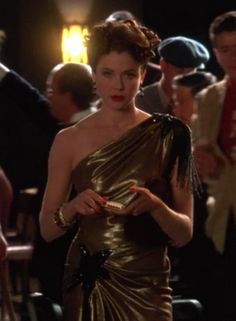
The Deal: Amazingly, Annette Bening doesn't have an Oscar, despite some fantastic Oscar-nominated performances (she lost to Hilary Swank twice). And then there's this performance, which didn't even get nominated. Her portrayal of Virginia Hill the gun moll who was the love of gangster Bugsy Siegel's life, was so spot-on, sexy and brash and vulnerable and fierce all at the same time. But what you didn't realize at the time was that the chemistry between Bening's character and Warren Beatty's Bugsy Siegel was more than just good acting—it was the start of a relationship (and a marriage the following year) which has lasted for 25 years now. Watching the movie after their relationship became public imbued Bening's every line with more sensuality—when she tells Siegel to "go outside and jerk yourself a soda," you feel it. The only reason I can attribute to her snub (given that the film received 11 Oscar nominations) is that she somehow was held responsible for the film's commercial failure, while Beatty, as well as Ben Kingsley and Harvey Keitel, all received Oscar nods. Such a shame.


There are many more performances I think deserved recognition from Oscar, so I'll be back with Part II shortly! Would love to hear your thoughts on these performances—of course, these are only my opinion!