Saturday, August 31, 2013
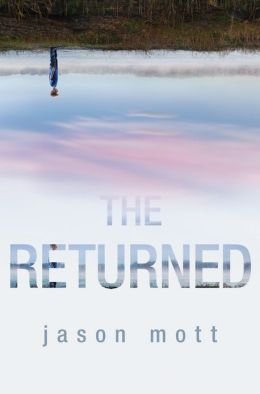
Book Review: "The Returned" by Jason Mott
Suddenly, and without warning, people are returning from the dead, at the same age and condition they were in prior to their death. All over the world these people, referred to as "the Returned," are showing up, most often in vastly different places than where they died, looking for those they knew and loved. No one is quite sure what to make of thisare the Returned a blessing, a chance to relive lives lost, or are they the devil in disguise?
It was the day of Jacob Hargrave's eighth birthday party in 1966 when he slipped away from the party and tragically drowned. His parents, Lucille and Harold, spent the next several decades mourning and remembering their son, and comfortably settling into curmudgeonly old age. When Jacob is returned to them, they are unprepared to raise an eight-year-old boy at their age, but his return reawakens Lucille's maternal instincts, as well as Harold's unease, and his questionsis this Jacob really their son? How can this be when he buried him himself? And will they lose him again?
The vast number of the Returned across the globe has brought the world to the brink of insanity, with those returning simply wanting to pick up their lives where they left off, while Tea Party-like movements representing the "true living" start to fear that the Returned might someday outnumber those who have never died. Harold and Lucille's small North Carolina hometown of Arcadia becomes the center of both movements, as the federal government begins assembling internment-type camps for the Returned, while the resentment of some of their neighbors toward the Returned becomes increasingly dangerous.
Just a few days before what would have been my beloved grandmother's 100th birthday, the thought of how wonderful it would be to spend more time with those I've lost is fairly fresh in my mind. The Returned explores many of the emotional responses people might have to such an occurrencewhat do you do if the love if your life returned but you moved on after their death? After facing the hurt of loss, are you willing to reopen your heart again to the uncertain possibility of more hurt and loss? Can you blindly love these people even if you're not sure if they're really those you've lost?
I loved the premise of this book and the emotions Mott explored. While, obviously, the main idea of the book is farfetched, he was fairly accurate in dealing with how people would react to such a phenomenon. I only wish the book hadn't spent so much time on brief vignettes of others who had returned at the expense of the Hargraves' story. And while inevitable, I wasn't as interested in all that the government did to deal with these people, or the inevitable confrontation with the irate citizens, although it did bring out some beautiful and emotionally poignant surprises.
This is a tremendously thought provoking book, and Jason Mott is a very talented writer who has created a book worthy of being discussed and debated. I wish it had gripped me more on the whole given the beauty of its central premise, but I still enjoyed reading it.
Friday, August 30, 2013
Cool cover song of the week...
Arguably Isaak's best known song is Wicked Game, which was released as a single in 1989, but it didn't gain traction until it was featured in David Lynch's 1990 movie Wild At Heart. The song's exposure in the film led to its reaching #6 on the Billboard Hot 100 chart in January 1991.
While Isaak's version, in my opinion, is the best, I think Irish singer-songwriter James Vincent McMorrow's version comes the closest to Isaak's. I know some of McMorrow's music, but didn't hear his version of Wicked Game until it was used to accompany a dance on a recent episode of So You Think You Can Dance. Once again, the mood of this song was perfectly evocative, and McMorrow does a good job with the vocal range of the song.
So here's a live performance of McMorrow's version, recorded in 2011 at the Kilkenny Arts Festival in Ireland.
P!nk has also been performing a rendition of the song on her latest tour. Here's a performance from San Jose earlier this year:
And here's Isaak's version. (It's a pretty hot video, too.)
Check out my previous Cool Cover Songs of the Week:
Borderline by The Counting Crows
How Deep Is Your Love by The Bird and The Bee
Life in a Northern Town by Sugarland, Little Big Town, and Jake Owen
I Don't Want to Talk About It by The Indigo Girls
Only You by Joshua Radin
Pure Imagination by Maroon 5
I'm Gonna Be (500 Miles) by Blake Stratton
What a Fool Believes by Neri Per Caso
Poker Face by Daughtry
Back to Black by Ronnie Spector
I Will Survive by Cake
The First Time Ever I Saw Your Face by The Stereophonics
Rolling in the Deep by John Legend
Go Your Own Way by Lissie
Winner Takes it All by McFly
What a Wonderful World by Joey Ramone
Careless Whisper by Seether
I Walk the Line by Live
Dear Prudence by Siouxsie and The Banshees
Smooth Criminal by Alien Ant Farm
Who Wants to Live Forever by Breaking Benjamin
Redemption Song by Chris Cornell and Audioslave
Love Me Tender by Chris Isaak and Brandi Carlile
All You Need is Love by The Flaming Lips
Lovesong by Adele
I Love It by Robin Thicke
Billie Jean by The Civil Wars
Across the Universe by The Scorpions
Can't Hold Us by Pentatonix
Thursday, August 29, 2013
Book Review: "Two Boys Kissing" by David Levithan
Seventeen-year-old former boyfriends Harry and Craig are planning to set a new Guinness World Record for continuous kissing. To do so, they'll need to kiss continuously for over 32 hours. This will take physical strength, yes, but also significant emotional fortitude and support from many, many people, since the sight of two boys kissing at alllet alone publicly for 32+ hourswill be difficult if not downright unacceptable for some.
While Harry and Craig undertake their record-setting quest, navigate their true feelings for one another, and deal with the myriad number of issues that will arise during this period, two other young couples are dealing with their own issues. Peter and Neil, who have been together for over a year, are struggling with trying to determine what their expectations of each other and their future should be, while Avery and Ryan, who just met, are struggling with issues of gender identity and all of the nerves of a blossoming relationship. Meanwhile, Tariq, a friend of Craig and Harry's, is trying to overcome his fears after being beaten up by a group of thugs, and Cooper is dealing with the aftermath of his parents' discovery of his homosexuality.
All of these storylines may seem somewhat typical, but Levithan develops each with depth and empathy in a short number of pages. And what lifts this book up even further is that it is narrated by a nameless Greek chorus of men who died of AIDS. Part lamentation for what they lost, part reflection on the struggles each of the characters are going through, since they've seen it all, their words are so insightful, so moving, so dead-on in many, many ways, I literally found myself tearing up multiple times as I flew through the book.
"You must understand: We were like Cooper. Or at least had moments when we were like Cooper. Just as we had moments when we were like Neil, Peter, Harry, Craig, Tariq, Avery, Ryan. We had moments when we were like each of you. This is how we understand. We wore your flaws. We wore your fears. We made your mistakes."
I read this entire book in one day, and I was moved and inspired beyond my expectations. Levithan made me laugh, think, and, as I mentioned earlier, cry with his words. I can't even begin to count the number of times he so perfectly captured many of the feelings I had as a teenager struggling with my sexuality, with self-esteem, with bullying, with wondering if my parents and family and friends would ever be able to accept me for who I was. And the book was pitch-perfect in its portrayal of the rush of emotions when you first meet someone you like and realize they feel the same way, the anxiety of wondering whether there will be a second date, the beauty of a first kiss.
I've said before how much I marvel at the state of YA fiction today, especially LGBT-themed fiction. I wish that Two Boys Kissing had existed when I was a teenager, because it would have been a tremendous help and comfort to me. I wish there was some way this book could be required reading for those struggling with their sexuality and with self-acceptance, as I believe it really could make a difference. Levithan doesn't create an unrealistic world where there are no problems and no struggles, but he shows how wonderful life has the potential to be, even when you don't think it can.
This is honestly one of the best books I've read in some time. Thank you, David Levithan, for this experience. I feel changed for the better.
Wednesday, August 28, 2013
And the Oscar goes to...
The movie, which also stars Jennifer Garner and Jared Leto (took me a while to realize it was him), opens in early December, and given that many (including me) thought McConaughey might get nominated for an Oscar last year, this may be the performance that finally gets him to the big dance. Looks pretty great, and I can almost guarantee I'll cry. (But that's nothing surprising.)
See for yourself:
Book Review: "The Virgins: A Novel" by Pamela Erens
Pamela Erens' new novel The Virgins seeks to capture that time, those feelings. It's 1979 at Auburn Academy, a prestigious New England prep school. Seung Jung, an affably popular Korean athlete, proctor, and dabbler in recreational drugs, begins a relationship with new student Aviva Rossner, a mid-western Jewish girl both desperate to be noticed and not to be noticed, who is trying to escape an unhappy childhood. While Seung is laid-back while Aviva is intense, the two find refuge in each other and their relationship, and are caught up in the youthful exuberance of young love and sexual exploration.
"Even the teachers talked about them. Seung Jung and Aviva Rossner were bewitched."
The couple isn't ashamed of demonstrating their affection for one another wherever they are, much to the chagrin of teachers and school administrators, and both the resentment and titillation of their fellow students. Bruce Bennett-Jones, a student quick to point out he descends from one of the "better" families in New Jersey (from the same town as Seung, but from the "right side of the tracks"), narrates the novel, both from remembered observations as an outsider looking in at Aviva and Seung's relationship, and details he imagined as someone resentful of the relationship, since he was attracted to Aviva himself.
As we often learn, however, what we see and what we believe to be true isn't always the reality, and that is the case for Seung and Aviva's relationship, which struggles far short of the unbridled sexual congress their peers imagine they partake in constantly. Laden down by physical and emotional pressures, by the expectations of Seung's parents and the dissolving marriage and disregard of Aviva's, the couple realizes that they, too, don't really understand each other, which ultimately leads to tragic consequences.
The Virgins all too accurately captures the feelings of adolescent relationships and the way they affect others. And while Bruce Bennett-Jones is an unsympathetic narrator, the way Pamela Erens describes his conflicted emotions and actions is spot-on as well. I found it interesting that the book was set in 1979, because apart from random mentions of historical events (and the absence of cell phones, emails, and text messages), I didn't necessarily feel that the time period had much of a bearing on what transpired in the bookso much of the feelings and issues it portrayed are the same today.
Erens is an excellent writer and she really hooked me on the plot pretty quickly. My only regret was that while I wanted to know what happened to the main characters, other than Seung, I didn't like them much. (It's a testament to Erens' storytelling ability that some of the supporting characters were far more interesting and dynamic than Aviva and Bruce, and in fact, I would love to know what happened to them.) Aviva's emotional coldness and vacillations made her less appealing, and Bruce's actions and simultaneous bravado and self-loathing made him very hard to care about. But again, it shows the strength of Erens' story that I wanted to keep reading despite disliking the characters.
The Virgins is a tremendously intriguing social commentary and a true reflection of a time in our lives we remember all too well, no matter how far away from it we come.
Monday, August 26, 2013
Book Review: "Night Film" by Marisha Pessl
Was it worth the wait? Hell, yes. I finished the book last night and I still cannot get it out of my mind.
Stanislas Cordova is a famous avant-garde movie director. Known for exposing the horror that lies beneath everyday situations, for manipulating emotions and inflicting psychological terror on his audiences, his films are beloved, reviled, and studied by film scholars worldwide. When the plot of one of Cordova's films is mirrored by an actual murderer, the public tide starts to turn against him, so his films become underground events, "night films," only shown in secret locations known to rabid fans.
Cordova's genius is celebrated yet the director, a notorious control freak and recluse, holes himself up in a heavily protected compound in upstate New York, where all of his films are made. Those actors and technicians that have worked with him refuse to talk about their experiences, or have disappeared for new lives in places unknown. There are rumors of the occult, of unspeakable acts being committed against children on Cordova's compound. Is he a twisted mastermind or a malevolent villain?
Celebrated investigative journalist Scott McGrath once tangled with Cordova, calling him out on a late night talk show. It destroyed McGrath's career, left him with much less money, and ended his marriage and many professional relationships. So when Cordova's daughter, Ashley, a gifted musician who apparently had more than her own share of demons, is found dead after an alleged suicide attempt, the logical thing for McGrath to do is to let it go, right?
But McGrath believes there is a story behind Ashley's death, and her troubled life, and he is determined to uncover it, in the hopes that the trail may lead him back to Cordova himself. Along with Hopper and Nora, two young people with their own connections to Ashley, McGrath begins digging deeper and deeper into what happened to Ashley. What they discover is that there are no easy answers to these questions, and everything they find out moves them closer to and further away from the truth, while placing their lives in danger. And the quest for answers takes McGrath into the horrors of his own mind.
This is an ambitious book, more than 600 pages in length, with fake newspaper and magazine articles, webpages, and photos sprinkled throughout to bolster the story. It is truly a thrill ride that leaves you breathless; I found myself wanting to see some of Cordova's movies after hearing them and his craft described so reverently. And while the book spent more time delving into the paranormal than I would have liked, the way that thread was tied up made the time worthwhile. You find yourself wondering just exactly what happened to those who worked with Cordova, or whether McGrath was telling the story the way he heard it, manipulating the facts to fit his own purposes.
Pessl did a fantastic job unraveling the plot piece by piece, and while I found myself needing to reread the last 50 or so pages to be sure I understood how things concluded, I felt tremendously satisfied although slightly out of breath, as if I had raced to the story's end. This isn't a book for everyone but it is so well-written, so well-told, that I hope it finds an audience willing to be teased, willing to think, and willing to get utterly hooked. Wow.
Sunday, August 25, 2013
Movie Review: "Lee Daniels' The Butler"
Cecil winds up working in an exclusive Washington, D.C. hotel, so perfectly embodying the subservient role of meeting guests' whims without their taking notice that he catches the eye of a White House aide, who hires him as a butler. His experience follows the pattern you'd expect, first awestruck then perfectly fitting in, and his service spans from the Eisenhowers through the Reagans.
But while Cecil is perfectly placid at work, his home life is far more tempestuous. Devoted to his work in order to give his family a much better life than he could ever imagine, his wife Gloria (a strong if underused Oprah Winfrey) resents his hours away from home and his refusal to share any secrets of the families he serves. His oldest son, Lewis (a terrific David Oyelowo), wants his father to take a stand against the growing racial disharmony in the country instead of being willing to blend into the background and take orders from white people. Lewis, much to Cecil's chagrin, becomes an outspoken advocate for civil rights, joining the Freedom Riders movement and many other protests in the south.
The film depicts our country's shameful racist behaviors with an unflinching eye, and it is sobering to see. (Even more sobering, of course, to realize that these instances, whether racially or homophobically motivated, still happen in our country in 2013.) But while the film's Forrest Gump-ian journey through civil rights history hits all of the highlights (the Woolworth's lunch counter sit-ins, Martin Luther King's assassination, etc.), it gives these incidents only cursory glances in an attempt to juxtapose Cecil's work with the battles going on in the world around him and his refusal to get involved.
While the oh-look-who-it-is parade of celebrities playing the occupants of the White House (Robin Williams as Eisenhower, James Marsden as JFK, Liev Schreiber as LBJ, John Cusack as Richard Nixon, and Alan Rickman and Jane Fonda as Ronald and Nancy Reagan) is interesting, none of their performances are particularly memorable or authentic. Only Cusack's Nixon comes reasonably close. And I wish that Lenny Kravitz and Cuba Gooding Jr. had more to do with their roles as Cecil's fellow butlers. (The less said about Terrence Howard's throwaway role as the Gaines' lecherous next door neighbor, the better.)
At its heart, Lee Daniels' The Butler is as much about relationships than anything else, and that is where the actors truly shine. When given more to do than glower, smoke, and complain, Winfrey's performance hints at some of the bravado of Sofia in The Color Purple with a little more emotional vulnerability, but I felt she wasn't used to her fullest potential. Oyelowo hits all the right notes as the son determined to make the world a better place for his people, even if that means sacrificing his family, and I felt an undercurrent of barely simmering conflicting emotions throughout his performance which truly worked.
But the movie, as you'd imagine from the title, belongs to Whitaker. His is a performance of quiet strength and emotion. But he so perfectly embodies the golden rule of servitude, of being seen and not heard, that the movie seems to be more about his observances of situations than participating in them. I still wouldn't be surprised to see him and Winfrey (and hopefully Oyelowo) among the list of Oscar nominees later this year.
The irony wasn't at all lost on me that I was watching this movie on the weekend during which the 50th anniversary of the March on Washington was being observed. Undoubtedly, our country has come a long, long way in 50 years, although there is still progress to be made. Lee Daniels' The Butler, although a little heavy-handed in its messaging from time to time, is a good reflection on this history, with some nuanced performances worth watching.
