I will admit that this book started slowly for me, and I wasn’t sure I wanted to keep reading. But I persevered a little longer and was richly rewarded by this beautiful, emotional love story.
Erica and Laure met in 1978, on the steps of the Sacré-Coeur in Paris. Laure is French, a graduate student at the Sorbonne. She’s very cerebral and lives her life the way she wants, no matter what. Erica is enjoying the summer before returning to England to start university.
Both women feel a spark the moment they met. While Laure has had relationships with women before, the awakening of this desire surprises Erica. They fall quickly, knowing they only have the summer. Yet once they part, the longing, the emotions, the hurt all continue.
“It is the condition of the heartbroken to believe no one has felt as they have, ever in the history of the world.”
The book spans more than 30 years. It sees Laure and Erica together and apart, trying to wring everything from each encounter. It traces the strength of their love despite other lovers, marriages, and changes both personal and political. In addition to being a love story, this is a reflection on the changing culture and politics toward equality.
This book was a very emotional one for me. I was surprised at just how much it took hold of my heart. I love books that take place in Paris, as I could see the city in my mind’s eye. Don’t be put off by the slow start, as the story is so worth it.
Showing posts with label 2000s. Show all posts
Thursday, July 30, 2026
Saturday, May 23, 2026
Book Review: "Last Night in Brooklyn" by Xochitl Gonzalez
I wasn’t aware of this before I started reading Last Night in Brooklyn, but it’s an updated retelling-of sorts of The Great Gatsby. Seeing as that’s one of my favorite books of all time, I’m always curious to see what authors do to update a classic like this.
Brooklyn, 2007. Alicia is 26 years old and feels like she’s stuck. She’s doing what is expected of her rather than what she wants to do. She’s saving for a wedding she’s not sure if she wants. But one night she attends a party in the Fort Greene neighborhood, and her life changes dramatically.
Alicia finds herself drawn into the orbit of her magnetic neighbor, an up and coming designer who calls herself La Garza. Alicia watches her neighbor from across the street, marveling at the epic parties she throws. When Alicia is invited into La Garza’s world, she finally realizes what she wants and what she’s been missing.
The setting of the book is as much a part as a character. Brooklyn in 2007 is on the verge of gentrification. The Barclays Center is about to be built, pushing out some of the neighborhood’s oldest residents. The country is already feeling the effects of a possible recession, but hope seems to be coming—in the form of Illinois Senator Barack Obama.
La Garza is a new type of Gatsbyesque character, but she retains the almost mythical reverence in which people hold her. She projects greatness and challenges others to seek it on their own, but you can tell she is her own fragile creation. Alicia is the book’s Nick Carraway, observing and commenting on the society surrounding La Garza, but truly powerless to fix the disasters that seem inevitable.
I definitely found this book to be intriguing, but I never connected with the characters as I did with Gonzalez’s other books. I did like this fresh retake on the Gatsby myth, and really felt that she made Fort Greene an important character.
Brooklyn, 2007. Alicia is 26 years old and feels like she’s stuck. She’s doing what is expected of her rather than what she wants to do. She’s saving for a wedding she’s not sure if she wants. But one night she attends a party in the Fort Greene neighborhood, and her life changes dramatically.
Alicia finds herself drawn into the orbit of her magnetic neighbor, an up and coming designer who calls herself La Garza. Alicia watches her neighbor from across the street, marveling at the epic parties she throws. When Alicia is invited into La Garza’s world, she finally realizes what she wants and what she’s been missing.
The setting of the book is as much a part as a character. Brooklyn in 2007 is on the verge of gentrification. The Barclays Center is about to be built, pushing out some of the neighborhood’s oldest residents. The country is already feeling the effects of a possible recession, but hope seems to be coming—in the form of Illinois Senator Barack Obama.
La Garza is a new type of Gatsbyesque character, but she retains the almost mythical reverence in which people hold her. She projects greatness and challenges others to seek it on their own, but you can tell she is her own fragile creation. Alicia is the book’s Nick Carraway, observing and commenting on the society surrounding La Garza, but truly powerless to fix the disasters that seem inevitable.
I definitely found this book to be intriguing, but I never connected with the characters as I did with Gonzalez’s other books. I did like this fresh retake on the Gatsby myth, and really felt that she made Fort Greene an important character.
Wednesday, February 25, 2026
Book Review: "The Emperor of Gladness" by Ocean Vuong
I had wanted to read this when it came out last year but never got around to it. It really was as beautifully written as I expected it to me, with a quiet, astonishing power.
Nineteen-year-old Hai is fresh out of rehab for an opioid addiction. He’s estranged from his mother—well, he’s been lying to her—and he feels like his life isn’t worth living. As he readies himself to jump off a bridge, he is stopped by the voice of a stranger.
The voice belongs to Grazina, an 80-year-old widow suffering from dementia. Somehow she is able to convince Hai to become her caregiver, a job he surprisingly comes to enjoy. The two connect over shared loneliness and build an unlikely bond, which changes both of them.
The book takes place in East Gladness, Connecticut, during the 2009 recession. It is a bleak time and people are doing everything they can to hang on. Hai takes a job at a fast food restaurant. He unexpectedly bonds with a group of coworkers, each of whom is a fractured piece of the whole that forms when they come together.
This is a story about chosen family, and how they make us think of our lives in a different way than we have been. There are moments of great emotion, heartbreak, humor, and grace.
I really enjoyed Vuong’s On Earth We’re Briefly Gorgeous, but I found this book to be more accessible. His prose is truly luminous—the descriptions he uses made me gasp at times. I’m very much looking forward to whatever he does next!
Nineteen-year-old Hai is fresh out of rehab for an opioid addiction. He’s estranged from his mother—well, he’s been lying to her—and he feels like his life isn’t worth living. As he readies himself to jump off a bridge, he is stopped by the voice of a stranger.
The voice belongs to Grazina, an 80-year-old widow suffering from dementia. Somehow she is able to convince Hai to become her caregiver, a job he surprisingly comes to enjoy. The two connect over shared loneliness and build an unlikely bond, which changes both of them.
The book takes place in East Gladness, Connecticut, during the 2009 recession. It is a bleak time and people are doing everything they can to hang on. Hai takes a job at a fast food restaurant. He unexpectedly bonds with a group of coworkers, each of whom is a fractured piece of the whole that forms when they come together.
This is a story about chosen family, and how they make us think of our lives in a different way than we have been. There are moments of great emotion, heartbreak, humor, and grace.
I really enjoyed Vuong’s On Earth We’re Briefly Gorgeous, but I found this book to be more accessible. His prose is truly luminous—the descriptions he uses made me gasp at times. I’m very much looking forward to whatever he does next!
Monday, March 31, 2025
Book Review: "Open, Heaven" by Seán Hewitt
When a poet writes a novel, the language used is often mesmerizing. That’s definitely the case here; thanks to Knopf and NetGalley for the advance copy of this!
“I had thought it would be painful to be reminded, but what I felt instead was a sort of collapse in time, or a possibility: a curious but strong sense that my old life might still exist there, that if I went back I might find those people, that summer, all going on there still, unharmed and unchanged.“
In 2002, James is 16. He’s gay, which makes him an object of curiosity in his small English town. His parents don’t quite know how to treat him, but it saddens them that James is a loner. What they don’t understand is just how much he wants to belong and how much he wants to find someone just like him.
And then Luke arrives, the nephew of James’ parents’ friends. Luke has come to stay at his aunt and uncle’s farm just outside James’ village because he has no one else to care for him—his mother has moved to Paris to be with another man, and his father is in jail. Luke has a reputation for being a bit of trouble, a bit out of control, and James is immediately smitten.
The story is told 20 years later. James is an adult and is looking at property that is for sale—the farm where Luke lived that year. James looks back on this not-quite-relationship that had such an impact on his life. It’s amazing how much our interactions with a person—particularly for a short time—can change us.
This was a beautifully told coming-of-age novel. James isn’t entirely sympathetic but his struggles, his longing felt very familiar to me. I’m amazed that this is a debut novel and can’t wait to see what comes next for Seán Hewitt.
The book will publish 4/15/2025.
“I had thought it would be painful to be reminded, but what I felt instead was a sort of collapse in time, or a possibility: a curious but strong sense that my old life might still exist there, that if I went back I might find those people, that summer, all going on there still, unharmed and unchanged.“
In 2002, James is 16. He’s gay, which makes him an object of curiosity in his small English town. His parents don’t quite know how to treat him, but it saddens them that James is a loner. What they don’t understand is just how much he wants to belong and how much he wants to find someone just like him.
And then Luke arrives, the nephew of James’ parents’ friends. Luke has come to stay at his aunt and uncle’s farm just outside James’ village because he has no one else to care for him—his mother has moved to Paris to be with another man, and his father is in jail. Luke has a reputation for being a bit of trouble, a bit out of control, and James is immediately smitten.
The story is told 20 years later. James is an adult and is looking at property that is for sale—the farm where Luke lived that year. James looks back on this not-quite-relationship that had such an impact on his life. It’s amazing how much our interactions with a person—particularly for a short time—can change us.
This was a beautifully told coming-of-age novel. James isn’t entirely sympathetic but his struggles, his longing felt very familiar to me. I’m amazed that this is a debut novel and can’t wait to see what comes next for Seán Hewitt.
The book will publish 4/15/2025.
Labels:
2000s,
bisexual,
book reviews,
brothers,
coming of age,
family,
fiction,
gay,
growing up,
LGBTQ,
nostalgia
Monday, January 20, 2025
Book Review: "The In-Between Bookstore" by Edward Underhill
Darby moved to NYC to go to college and put some distance between him and Oak Falls, his small Illinois hometown. As a trans man, getting a fresh start was exactly what he needed, away from those who looked down on him.
Now, as he nears 30, he’s just lost his job, his rent is increasing, and he’s feeling rudderless. It feels like all of his best friends are making progress in their lives, while he’s not. When he learns that his mother is planning to sell his childhood home and move into a new condo, he decides to move back to Oak Falls.
So much has changed in Oak Falls since Darby left. But one thing hasn’t: In Between Books, the store where he worked in high school. In fact, when he goes into the store, the new releases and the newspapers are all from 2009. And the kid behind the counter seems so much like Darby at 16…could it be Darby?
As Darby tries to connect with his teenage self, he also tries to figure out where his life went off track, and how to fix it. He also encounters Michael, his best friend while growing up, whom he hasn’t seen since their friendship ended dramatically before Darby left Oak Falls.
I love time travel and time loops, and how characters learn from the past. But this book never really took off for me. I didn’t really feel like Darby learned much, and I felt like everything in the book was left fairly unresolved.
Edward Underhill has written three YA books that I’ve enjoyed, so I was looking forward to his adult debut. I like the way he writes, so hopefully his next book will have more of a spark for me.
Now, as he nears 30, he’s just lost his job, his rent is increasing, and he’s feeling rudderless. It feels like all of his best friends are making progress in their lives, while he’s not. When he learns that his mother is planning to sell his childhood home and move into a new condo, he decides to move back to Oak Falls.
So much has changed in Oak Falls since Darby left. But one thing hasn’t: In Between Books, the store where he worked in high school. In fact, when he goes into the store, the new releases and the newspapers are all from 2009. And the kid behind the counter seems so much like Darby at 16…could it be Darby?
As Darby tries to connect with his teenage self, he also tries to figure out where his life went off track, and how to fix it. He also encounters Michael, his best friend while growing up, whom he hasn’t seen since their friendship ended dramatically before Darby left Oak Falls.
I love time travel and time loops, and how characters learn from the past. But this book never really took off for me. I didn’t really feel like Darby learned much, and I felt like everything in the book was left fairly unresolved.
Edward Underhill has written three YA books that I’ve enjoyed, so I was looking forward to his adult debut. I like the way he writes, so hopefully his next book will have more of a spark for me.
Wednesday, December 4, 2024
Book Review: "A Reason to See You Again" by Jami Attenberg
Post-Thanksgiving and pre-holidays, here’s a healthy dollop of family dysfunction in book form!
Rudy was a Holocaust survivor who traveled the country speaking to groups about what life was like in the camps. His traveling secretary, Frieda, becomes his wife, and together they raise two daughters, Nancy and Shelly. Rudy is the peacemaker, the one who smooths Frieda’s rough edges, as she becomes increasingly critical of her daughters. (It intensifies more when she drinks, which is becoming a nightly activity.)
When Rudy dies, the three women are adrift without a buffer. Frieda’s drinking becomes more of a problem, Nancy leaves for college, and Shelly throws herself into her schoolwork in the hopes she can get as far away as possible. But Frieda’s abuse takes its toll on the self-esteem of both her daughters.
As the years pass, Nancy marries young and has a daughter, but isn’t really sure that this is the life she wants. Shelly moves to the West Coast and becomes a driving force in the rapidly growing field of mobile phone technology. The sisters don’t see other much, and when they do, their interactions are affected by uncertainty, envy, and resentment.
Meanwhile, Frieda has moved to Miami, and continues her self-destructive ways. She also has some guilt about how she treated her daughters when they were growing up, and she mourns the life she had before her husband died. But at some point, all three women realize that you can only blame others for your misery for so long before you need to take responsibility for your own life.
The story spans four decades, beginning in the early 1970s, and is narrated by all three women and Rudy. I felt the story had promise early but lost its way; there’s only so long you can read about people unhappy and not interested in changing things.
Rudy was a Holocaust survivor who traveled the country speaking to groups about what life was like in the camps. His traveling secretary, Frieda, becomes his wife, and together they raise two daughters, Nancy and Shelly. Rudy is the peacemaker, the one who smooths Frieda’s rough edges, as she becomes increasingly critical of her daughters. (It intensifies more when she drinks, which is becoming a nightly activity.)
When Rudy dies, the three women are adrift without a buffer. Frieda’s drinking becomes more of a problem, Nancy leaves for college, and Shelly throws herself into her schoolwork in the hopes she can get as far away as possible. But Frieda’s abuse takes its toll on the self-esteem of both her daughters.
As the years pass, Nancy marries young and has a daughter, but isn’t really sure that this is the life she wants. Shelly moves to the West Coast and becomes a driving force in the rapidly growing field of mobile phone technology. The sisters don’t see other much, and when they do, their interactions are affected by uncertainty, envy, and resentment.
Meanwhile, Frieda has moved to Miami, and continues her self-destructive ways. She also has some guilt about how she treated her daughters when they were growing up, and she mourns the life she had before her husband died. But at some point, all three women realize that you can only blame others for your misery for so long before you need to take responsibility for your own life.
The story spans four decades, beginning in the early 1970s, and is narrated by all three women and Rudy. I felt the story had promise early but lost its way; there’s only so long you can read about people unhappy and not interested in changing things.
Labels:
1970s,
1980s,
1990s,
2000s,
abuse,
addiction,
alcohol,
book reviews,
daughters,
dysfunction,
family,
fiction,
grief,
Judaism,
loss,
marriage,
motherhood,
sisters,
technology
Friday, September 13, 2024
Book Review: "The Accomplice" by Curtis "50 Cent" Jackson and Aaron Philip Clark
I’ll admit that of all the celebrity authors out there, I never would’ve expected a crime novel from Curtis Johnson, aka rapper 50 Cent. And while I’m often dubious about celebrities writing books, when I saw a blurb from S.A. Cosby, how could I resist?
From a young age, Nia Adams was fascinated by law enforcement and crime scenes. Her dream was to become a Texas Ranger, and now, she’s the first Black female Ranger. It’s not always easy under that kind of scrutiny but she’s really good at what she does.
It’s 2004. Nia and others are called in to stop a bank robbery in progress. While the other law enforcement officers present try to keep Nia from intervening, she steps in just in time to prevent total disaster.
When she is sent to a remote Texas town to investigate another bank robbery, she can’t understand why a Ranger needs to be involved. There are things about this robbery that perplex her, and despite the fact that the local sheriff has no concerns, she decides to do some more digging. But she has no idea of the web she’s stepping into.
Desmond Bell is a veteran of the Vietnam war, still haunted by what he saw back then. He’s more than a bank robber; his preferred currency is secrets that his employer can use as leverage for blackmail. But when Desmond targets a powerful family, which includes a potential presidential candidate, he’s taken on enemies that will stop at nothing to protect their interests.
Nia finds herself caught in the middle of two powerful nemeses. Every step forward puts her life and career in danger, and puts others in the crossfire. Who will blink first?
While I’m always a bit dubious when a book by a celebrity is co-authored so you don’t know how much of a part they actually played, I enjoyed this. Although the pacing was uneven and the ending felt a bit rushed, I’d definitely read another of Jackson’s crime novels.
From a young age, Nia Adams was fascinated by law enforcement and crime scenes. Her dream was to become a Texas Ranger, and now, she’s the first Black female Ranger. It’s not always easy under that kind of scrutiny but she’s really good at what she does.
It’s 2004. Nia and others are called in to stop a bank robbery in progress. While the other law enforcement officers present try to keep Nia from intervening, she steps in just in time to prevent total disaster.
When she is sent to a remote Texas town to investigate another bank robbery, she can’t understand why a Ranger needs to be involved. There are things about this robbery that perplex her, and despite the fact that the local sheriff has no concerns, she decides to do some more digging. But she has no idea of the web she’s stepping into.
Desmond Bell is a veteran of the Vietnam war, still haunted by what he saw back then. He’s more than a bank robber; his preferred currency is secrets that his employer can use as leverage for blackmail. But when Desmond targets a powerful family, which includes a potential presidential candidate, he’s taken on enemies that will stop at nothing to protect their interests.
Nia finds herself caught in the middle of two powerful nemeses. Every step forward puts her life and career in danger, and puts others in the crossfire. Who will blink first?
While I’m always a bit dubious when a book by a celebrity is co-authored so you don’t know how much of a part they actually played, I enjoyed this. Although the pacing was uneven and the ending felt a bit rushed, I’d definitely read another of Jackson’s crime novels.
Monday, August 5, 2024
Book Review: "The History of Sound" by Ben Shattuck
When short stories are done well, they can have as much power as a full-length novel. And sometimes, they make you long for more time with their characters but don’t leave you hanging. The History of Sound hits both of those targets.
What’s unique about this collection, however, is that elements of one story appear in another, so they’re essentially paired. Sometimes the pairing is more obvious and other times it’s more subtle, but this technique gives you a different perspective from a different timeframe.
There are absolutely beautiful stories in this collection. My favorite is the title story, where a music student meets a man in a bar just as WWI is heating up. The two fall in love, and spend a summer walking through the woods of Maine, collecting folk songs from various people. Their relationship is brief but has an immense effect on the musician, even years later. (This is being made into a movie with Paul Mescal and Josh O'Connor.)
Some other stories that I know will stick with me include: “The Auk,” which follows a man dealing with his wife’s dementia in a very unique way; “August in the Forest,” about relationships and secrets we keep from those we love; and “Edwin Chase of Nantucket,” in which a young man’s life in 1796 is upended when his mother’s old boyfriend arrives with his new wife.
All of the stories take place in New England, and are set anywhere from the 1700s to the present. Ben Shattuck is definitely an immense talent, one whose career I’ll eagerly be following.
What’s unique about this collection, however, is that elements of one story appear in another, so they’re essentially paired. Sometimes the pairing is more obvious and other times it’s more subtle, but this technique gives you a different perspective from a different timeframe.
There are absolutely beautiful stories in this collection. My favorite is the title story, where a music student meets a man in a bar just as WWI is heating up. The two fall in love, and spend a summer walking through the woods of Maine, collecting folk songs from various people. Their relationship is brief but has an immense effect on the musician, even years later. (This is being made into a movie with Paul Mescal and Josh O'Connor.)
Some other stories that I know will stick with me include: “The Auk,” which follows a man dealing with his wife’s dementia in a very unique way; “August in the Forest,” about relationships and secrets we keep from those we love; and “Edwin Chase of Nantucket,” in which a young man’s life in 1796 is upended when his mother’s old boyfriend arrives with his new wife.
All of the stories take place in New England, and are set anywhere from the 1700s to the present. Ben Shattuck is definitely an immense talent, one whose career I’ll eagerly be following.
Labels:
1700s,
1800s,
1900s,
2000s,
art,
book reviews,
family,
fiction,
love,
music,
New England,
relationships,
short story,
story collections,
writing
Wednesday, May 29, 2024
Book Review: "In Tongues" by Thomas Grattan
I saw a friend post about this book on Bookstagram and the description intrigued me. After reading it, I was blown away by how it pulled me in. This is a character-driven, coming-of-age story that made me recall similar feelings (although in very different situations).
Early in 2001, following the end of his relationship with his boyfriend, Gordon decides to take a bus from his home in Minnesota to New York City, because it’s the only place he can think of. He knows no one and is lonely, hungry for companionship and for someone to give him direction.
He gets a job walking dogs for rich people in the city, and he builds a friendship with a bartender and her girlfriend. And then one day he meets two of his clients, Phillip and Nicola, a wealthy, gay couple who own a prestigious art gallery. Gordon isn’t sure how to act around them, but the men treat him well—and occasionally like a servant. It’s not long before Gordon becomes their personal assistant, part chauffeur, part errand boy, part object of admiration and flirtation.
At only 24, Gordon has no real ambition, except to feel like he belongs, like he is cared for, like he has purpose. But he remains unsure of what his role in the men’s lives really is, and what they expect of him. And when troubles arise in Phillip and Nicola’s relationship, Gordon becomes further enmeshed, especially in Phillip’s life.
With no real adult role models (his relationships with both of his parents are strained and odd), Gordon looks to Phillip for some direction. But Phillip is unsure of his own life and what he wants from Gordon and Nicola, so it’s not long before Gordon becomes collateral damage, and finds himself drifting from place to place, looking for love (or at least desire) and a path to follow.
In Tongues was so compelling and so beautifully written. There are dramatic moments but for the most part it’s a quiet book, but a powerful, emotional, and thought-provoking one.
Early in 2001, following the end of his relationship with his boyfriend, Gordon decides to take a bus from his home in Minnesota to New York City, because it’s the only place he can think of. He knows no one and is lonely, hungry for companionship and for someone to give him direction.
He gets a job walking dogs for rich people in the city, and he builds a friendship with a bartender and her girlfriend. And then one day he meets two of his clients, Phillip and Nicola, a wealthy, gay couple who own a prestigious art gallery. Gordon isn’t sure how to act around them, but the men treat him well—and occasionally like a servant. It’s not long before Gordon becomes their personal assistant, part chauffeur, part errand boy, part object of admiration and flirtation.
At only 24, Gordon has no real ambition, except to feel like he belongs, like he is cared for, like he has purpose. But he remains unsure of what his role in the men’s lives really is, and what they expect of him. And when troubles arise in Phillip and Nicola’s relationship, Gordon becomes further enmeshed, especially in Phillip’s life.
With no real adult role models (his relationships with both of his parents are strained and odd), Gordon looks to Phillip for some direction. But Phillip is unsure of his own life and what he wants from Gordon and Nicola, so it’s not long before Gordon becomes collateral damage, and finds himself drifting from place to place, looking for love (or at least desire) and a path to follow.
In Tongues was so compelling and so beautifully written. There are dramatic moments but for the most part it’s a quiet book, but a powerful, emotional, and thought-provoking one.
Labels:
2000s,
9/11,
art,
book reviews,
family,
fiction,
friendship,
gay,
growing up,
lesbian,
LGBTQ,
loneliness,
money,
NYC,
relationships,
religion,
sex,
wealth
Friday, November 25, 2022
Book Review: "All This Could Be Different" by Sarah Thankam Mathews
This book was a finalist for the National Book Award and several friends raved about it. The best description I’ve seen from people is that it is a quintessentially millennial novel, one that captures the angst of dealing with work, love, friendship, money, and family. Being a bit (ahem) older than a millennial, this book didn’t quite hit me the same way but it’s definitely well-written and powerful.
Sneha moves to Milwaukee for a consulting job shortly after college, at the cusp of the 2008 recession. The job is soul-crushing, but she actually likes some of it. But the job provides her with a free apartment (despite a challenging property manager), a group of colleagues she can at least drink with, and enough money to spend as she wants and still send money home to her parents in India.
All is definitely not perfect, though; she struggles with real connection. Although she is able to get a job for one of her college best friends, and while she finds a close friend, Tig, the dating apps aren’t helping her find a girl to really connect with. Then she meets Marina, a dancer and choreographer with her own set of problems.
Sneha’s life and those of her friends seem built on the flimsiest of foundations. Jobs are in danger, evictions are threatened, addictions are struggled with, and Sneha must come to terms with secrets she has tucked away.
These characters are flawed and complex, and Mathews isn’t afraid to show you their unflattering sides. That doesn’t always make for easy reading; at times characters are racist, transphobic, and fatphobic, but those attitudes are more typical of the time in which the book was set.
If anything, this book may make you happy you survived the stressful days of youth and made it to wherever you are now!!
Sneha moves to Milwaukee for a consulting job shortly after college, at the cusp of the 2008 recession. The job is soul-crushing, but she actually likes some of it. But the job provides her with a free apartment (despite a challenging property manager), a group of colleagues she can at least drink with, and enough money to spend as she wants and still send money home to her parents in India.
All is definitely not perfect, though; she struggles with real connection. Although she is able to get a job for one of her college best friends, and while she finds a close friend, Tig, the dating apps aren’t helping her find a girl to really connect with. Then she meets Marina, a dancer and choreographer with her own set of problems.
Sneha’s life and those of her friends seem built on the flimsiest of foundations. Jobs are in danger, evictions are threatened, addictions are struggled with, and Sneha must come to terms with secrets she has tucked away.
These characters are flawed and complex, and Mathews isn’t afraid to show you their unflattering sides. That doesn’t always make for easy reading; at times characters are racist, transphobic, and fatphobic, but those attitudes are more typical of the time in which the book was set.
If anything, this book may make you happy you survived the stressful days of youth and made it to wherever you are now!!
Labels:
2000s,
bisexual,
book reviews,
family,
fiction,
friendship,
immigration,
lesbian,
LGBTQ,
love,
money,
racism,
relationships,
sexism,
work
Book Review: "They're Going to Love You" by Meg Howrey
The latest novel from Meg Howrey is a story of ambition and family dysfunction, set against the backdrop of the ballet world.
With a mother who was a former Balanchine ballerina and a father who managed a dance company, could Carlisle want to be anything other than a dancer? She pursued it with great gusto, especially because it gave her more chances to enter her father’s glamorous world, where he lived in Greenwich Village with his partner, James, a former dancer-turned-teacher.
She loved spending time with her father Robert and James in particular, although in the mid- to late 1980s, the AIDS crisis decimated their circle of friends. But James also taught her about the world, about art, life, and of course, dance. Until a betrayal occurred which tore them apart and estranges her from her father.
Nineteen years later, Carlisle has made a life for herself as a choreographer and dance teacher. One day she gets a phone call—it’s James, and he tells her that her father is dying. She’s not spoken to her father in almost 20 years, but James thinks he’d like to see her before he dies. Doing so reopens old wounds and forces Carlisle to confront the reasons for their estrangement.
Howrey is a former dancer and she brings such authenticity to her descriptions of the dance world, the hunger to perform. I felt like there was a little too much detail here, which bogged the plot down, and it took SO LONG for the reason for Carlisle and Robert’s estrangement to be revealed. (And honestly, I was like, "That's it?")
I’ve seen some great reviews of this, so it might’ve just been me. I have enjoyed some of her previous novels.
With a mother who was a former Balanchine ballerina and a father who managed a dance company, could Carlisle want to be anything other than a dancer? She pursued it with great gusto, especially because it gave her more chances to enter her father’s glamorous world, where he lived in Greenwich Village with his partner, James, a former dancer-turned-teacher.
She loved spending time with her father Robert and James in particular, although in the mid- to late 1980s, the AIDS crisis decimated their circle of friends. But James also taught her about the world, about art, life, and of course, dance. Until a betrayal occurred which tore them apart and estranges her from her father.
Nineteen years later, Carlisle has made a life for herself as a choreographer and dance teacher. One day she gets a phone call—it’s James, and he tells her that her father is dying. She’s not spoken to her father in almost 20 years, but James thinks he’d like to see her before he dies. Doing so reopens old wounds and forces Carlisle to confront the reasons for their estrangement.
Howrey is a former dancer and she brings such authenticity to her descriptions of the dance world, the hunger to perform. I felt like there was a little too much detail here, which bogged the plot down, and it took SO LONG for the reason for Carlisle and Robert’s estrangement to be revealed. (And honestly, I was like, "That's it?")
I’ve seen some great reviews of this, so it might’ve just been me. I have enjoyed some of her previous novels.
Labels:
1980s,
2000s,
AIDS,
ballet,
betrayal,
book reviews,
dance,
family,
fiction,
friendship,
gay,
grief,
LGBTQ,
money,
parents,
relationships,
secrets
Sunday, July 10, 2022
Book Review: "Kaleidoscope" by Cecily Wong
This is a poignant story of family dynamics, secrets, and grief.
Hank and Karen Brighton owned an organic grocery store in Oregon until they’re inspired to start selling clothes and goods from India and other countries. It’s not long before they’ve created Kaleidoscope, which becomes a shopping empire, enticing wealthy people to explore the more exotic side of fashion, furnishings, and art.
Morgan, their oldest daughter, turns heads with her model-esque beauty, but her fashion savvy makes her the star of Kaleidoscope, even though she hasn’t graduated from college yet. And while her younger sister Riley finds it difficult to be in Morgan’s shadow, she also loves her sister fiercely.
When tragedy strikes the Brightons, combined with the economic collapse of the late 2000s, the family and the empire they’ve built threaten to collapse. Riley sets off on an international trip with a companion who raises eyebrows, and discovers herself—as well as some family secrets kept hidden.
This was an interesting book about family and grief and finding your own way. At times I found myself really immersed in the story but at other times I struggled to connect with the characters. It’s gotten a lot of rave reviews, though, so it may have just been me.
Hank and Karen Brighton owned an organic grocery store in Oregon until they’re inspired to start selling clothes and goods from India and other countries. It’s not long before they’ve created Kaleidoscope, which becomes a shopping empire, enticing wealthy people to explore the more exotic side of fashion, furnishings, and art.
Morgan, their oldest daughter, turns heads with her model-esque beauty, but her fashion savvy makes her the star of Kaleidoscope, even though she hasn’t graduated from college yet. And while her younger sister Riley finds it difficult to be in Morgan’s shadow, she also loves her sister fiercely.
When tragedy strikes the Brightons, combined with the economic collapse of the late 2000s, the family and the empire they’ve built threaten to collapse. Riley sets off on an international trip with a companion who raises eyebrows, and discovers herself—as well as some family secrets kept hidden.
This was an interesting book about family and grief and finding your own way. At times I found myself really immersed in the story but at other times I struggled to connect with the characters. It’s gotten a lot of rave reviews, though, so it may have just been me.
Labels:
2000s,
book reviews,
business,
family,
fashion,
fiction,
friendship,
grief,
loss,
love,
relationships,
secrets,
siblings,
travel
Friday, March 4, 2022
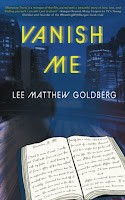
Book Review: "Vanish Me" by Lee Matthew Goldberg
In Vanish Me, a teenage girl’s search for her missing mother, a former musician, helps her find herself, too.
One great reading discovery I made last year was the Runaway Train trilogy by Lee Matthew Goldberg. I read the first two books, Runaway Train and Grenade Bouquets, last year, and this was the last book in the series.
The first two books took place in the mid-1990s and followed Nico, a rebellious teenager who leaves home following her older sister’s death and, after some fits and starts, becomes a musician. She falls prey to the pitfalls of fame and drug and alcohol addiction, but she becomes a real star as well. The books really captured the music and feel of the 1990s.
Vanish Me takes place in 2014. Nico has gone missing and her estranged teenage daughter, Love, decides to try and find her mother after finding her old diary. She and her two best friends set off for Los Angeles in an attempt to track down anyone who might know where Nico could have gone.
The story alternates between Nico’s journal entries before and after Love was born, and Love’s attempts to find her mother. In trying to understand the challenges Nico faced and the pain she inflicted on others along the way, Love also begins to understand herself a little better, and tries to figure out what she might want from her own life as well as her mother, if they find her.
This was a satisfying conclusion to the trilogy. I really enjoyed Love’s character and how her journey tied up a lot of loose ends from the previous book. Nico’s journal entries definitely gave more insight into why she was the way she was, but still underscored her selfishness. This was a well-told, poignant, fun journey, with lots of good music references thrown in.
Thanks to Suzy Approved Book Tours, Wise Wolf Books, and Lee Matthew Goldberg for inviting me on the tour for this book and providing a complimentary copy of the book in exchange for an unbiased review!!
One great reading discovery I made last year was the Runaway Train trilogy by Lee Matthew Goldberg. I read the first two books, Runaway Train and Grenade Bouquets, last year, and this was the last book in the series.
The first two books took place in the mid-1990s and followed Nico, a rebellious teenager who leaves home following her older sister’s death and, after some fits and starts, becomes a musician. She falls prey to the pitfalls of fame and drug and alcohol addiction, but she becomes a real star as well. The books really captured the music and feel of the 1990s.
Vanish Me takes place in 2014. Nico has gone missing and her estranged teenage daughter, Love, decides to try and find her mother after finding her old diary. She and her two best friends set off for Los Angeles in an attempt to track down anyone who might know where Nico could have gone.
The story alternates between Nico’s journal entries before and after Love was born, and Love’s attempts to find her mother. In trying to understand the challenges Nico faced and the pain she inflicted on others along the way, Love also begins to understand herself a little better, and tries to figure out what she might want from her own life as well as her mother, if they find her.
This was a satisfying conclusion to the trilogy. I really enjoyed Love’s character and how her journey tied up a lot of loose ends from the previous book. Nico’s journal entries definitely gave more insight into why she was the way she was, but still underscored her selfishness. This was a well-told, poignant, fun journey, with lots of good music references thrown in.
Thanks to Suzy Approved Book Tours, Wise Wolf Books, and Lee Matthew Goldberg for inviting me on the tour for this book and providing a complimentary copy of the book in exchange for an unbiased review!!
Labels:
1990s,
2000s,
addiction,
book reviews,
celebrities,
disappearance,
family,
fiction,
friendship,
growing up,
high school,
love,
motherhood,
musicians,
parents,
relationships,
sexuality,
young adult
Monday, May 10, 2021
Book Review: "Things We Lost to the Water" by Eric Nguyen
Eric Nguyen's debut novel, Things We Lost to the Water, is a beautifully written look at an immigrant Vietnamese family, and how their lives are shaped or reshaped by America.
Huong and her two young sons leave Vietnam in 1979 and move to New Orleans. Huong’s husband, Cong, stays in Vietnam, although she looks forward to the day they will be reunited. She sends letters and audiotapes home to Vietnam in the hopes that her words will motivate him to come to America, so her boys can know their father.
As she starts to settle in to their new home, Huong starts to lose hope that she’ll ever see her husband again. But she’s determined to create a better life for her sons, even though it’s hard to understand what it’s like for them growing up when you’re different to those around you.
“If her sons asked about their father, she told herself, she would tell them some kind of truth, what she knew of it: their father would not be joining them in New Orleans; this was all beyond their control and they had to try their best, she would say, to move forward.”
The book moves forward as snapshots in time, from 1979 to 2005, narrated by Huong and her sons. Huong becomes more acclimated to life in America and becomes involved with a Vietnamese car salesman. Her older son, Tuan, tries to keep his Vietnamese identity by joining a gang and trying to prove himself, while her younger son Binh, who calls himself Ben, struggles with his sexuality and his desire to escape the life his mother has built.
Ultimately they are all changed when New Orleans faces its greatest challenge ever. Will it bring them together or push them further apart?
I was so taken in by Eric Nguyen’s storytelling ability. It’s so hard to believe that Things We Lost to the Water was a debut novel. This story is thought-provoking and moving, although the challenge of the narrative structure is I didn’t feel like I got to know the characters as well as I would have liked, because we saw them in short bursts rather than consistently.
I definitely believe this will be a highly talked-about book, and I look forward to seeing what’s next in Nguyen’s career!
Huong and her two young sons leave Vietnam in 1979 and move to New Orleans. Huong’s husband, Cong, stays in Vietnam, although she looks forward to the day they will be reunited. She sends letters and audiotapes home to Vietnam in the hopes that her words will motivate him to come to America, so her boys can know their father.
As she starts to settle in to their new home, Huong starts to lose hope that she’ll ever see her husband again. But she’s determined to create a better life for her sons, even though it’s hard to understand what it’s like for them growing up when you’re different to those around you.
“If her sons asked about their father, she told herself, she would tell them some kind of truth, what she knew of it: their father would not be joining them in New Orleans; this was all beyond their control and they had to try their best, she would say, to move forward.”
The book moves forward as snapshots in time, from 1979 to 2005, narrated by Huong and her sons. Huong becomes more acclimated to life in America and becomes involved with a Vietnamese car salesman. Her older son, Tuan, tries to keep his Vietnamese identity by joining a gang and trying to prove himself, while her younger son Binh, who calls himself Ben, struggles with his sexuality and his desire to escape the life his mother has built.
Ultimately they are all changed when New Orleans faces its greatest challenge ever. Will it bring them together or push them further apart?
I was so taken in by Eric Nguyen’s storytelling ability. It’s so hard to believe that Things We Lost to the Water was a debut novel. This story is thought-provoking and moving, although the challenge of the narrative structure is I didn’t feel like I got to know the characters as well as I would have liked, because we saw them in short bursts rather than consistently.
I definitely believe this will be a highly talked-about book, and I look forward to seeing what’s next in Nguyen’s career!
Labels:
1900s,
1970s,
1980s,
2000s,
book reviews,
culture,
family,
fiction,
gay,
immigration,
LGBTQ,
marriage,
parenthood,
parents,
relationships,
religion,
siblings,
Vietnam
Monday, August 17, 2020
Book Review: "The Unraveling of Cassidy Holmes" by Elissa R. Sloan
The Unraveling of Cassidy Holmes, Elissa R. Sloan's debut novel, chronicles the highs and lows of an early-aughts pop group.
In the early 2000s, Gloss was the most popular music group around. The four female members—known as Sassy, Rosy, Tasty, and Cherry (or Cassy, Rose, Yumi, and Merry)—were always in the public eye.
But by 2002 it was all over. The group went their own ways, and despite how close they all were, Cassidy in particular lost touch with all of them. Years later, as Rose, Yumi, and Merry ride a slight wave of nostalgia around Gloss, they get shocking news—Cassidy has died. Suicide.
How could this have happened? Should they have kept better track of her, tried to maintain a relationship with her despite the circumstances? Each woman wracks their brain to see where they could have let her down.
Shifting in perspective from the late 1990s to the present, narrated by all four girls, the book chronicles the joy, sadness, and secrets of the group, and looks at how easily things can go awry. It’s also a hard look at triggers like eating disorders, addiction, depression, and abuse.
I really wanted to love this one, as it certainly had some similarities to one of my favorite books of 2019, Daisy Jones and the Six. I enjoyed the overall thrust of the story.
But while I found it all interesting, the story took a long time to unfold, and I never felt as if we had the complete picture of any of the characters, not even Cassidy. And while there’s always a villain in books, I found one character just so ridiculously odious for someone who was so young.
Still, if you love the whole “Behind the Music” kind of thing, you may enjoy this one.
In the early 2000s, Gloss was the most popular music group around. The four female members—known as Sassy, Rosy, Tasty, and Cherry (or Cassy, Rose, Yumi, and Merry)—were always in the public eye.
But by 2002 it was all over. The group went their own ways, and despite how close they all were, Cassidy in particular lost touch with all of them. Years later, as Rose, Yumi, and Merry ride a slight wave of nostalgia around Gloss, they get shocking news—Cassidy has died. Suicide.
How could this have happened? Should they have kept better track of her, tried to maintain a relationship with her despite the circumstances? Each woman wracks their brain to see where they could have let her down.
Shifting in perspective from the late 1990s to the present, narrated by all four girls, the book chronicles the joy, sadness, and secrets of the group, and looks at how easily things can go awry. It’s also a hard look at triggers like eating disorders, addiction, depression, and abuse.
I really wanted to love this one, as it certainly had some similarities to one of my favorite books of 2019, Daisy Jones and the Six. I enjoyed the overall thrust of the story.
But while I found it all interesting, the story took a long time to unfold, and I never felt as if we had the complete picture of any of the characters, not even Cassidy. And while there’s always a villain in books, I found one character just so ridiculously odious for someone who was so young.
Still, if you love the whole “Behind the Music” kind of thing, you may enjoy this one.
Labels:
2000s,
book reviews,
celebrities,
depression,
family,
fiction,
friendship,
gossip,
grief,
growing up,
loss,
love,
music,
musicians,
relationships,
suicide
Thursday, January 30, 2020
Book Review: "The Lost Night" by Andrea Bartz
How reliable are our memories, particularly of a traumatic time? Andrea Bartz's mystery, The Lost Night, effectively explores that question.
In 2009, just as the U.S. economy was collapsing, a group of friends in their early 20s spend their days partying, drinking hard, listening and playing music, and falling in and out of hookups and relationships. At the center of the group is Edie—beautiful, mercurial, pulling all into her web. Everyone wanted to be noticed by her, wanted her approval.
Lately Edie had seemed a bit troubled; she and her boyfriend had broken up even though they kept living together. But everyone was still stunned when one night, while a massive concert and party was going on up on the roof of their building, Edie was found dead, gun in her hand, suicide note on her computer.
Ten years later, Lindsay, the outsider of the group, reconnects with Edie’s old roommate, Sarah, when Sarah moves back to town. Sarah is the one who found her, and at the time insisted there was no way Edie could’ve killed herself.
When Sarah tells Lindsay that contrary to what she has believed for 10 years, Lindsay wasn’t with them at the concert prior to Edie's being found, it shakes her to her core. Lindsay becomes obsessed with figuring out what she did that night, and when she finds evidence that she might have seen Edie just before she killed herself, she worries that perhaps Sarah was rightmaybe Edie's death wasn't a suicide. But might she have had a role somehow?
"Distressed, we construct realities that feel just as real as the world around us. Whose brain had concocted a new version of that nightmine or Sarah's?"
This was a very compelling mystery which captures the arrogant invincibility we feel when we’re younger and the unreliability of memories. I was surprised with how things resolved themselves (I usually don't trust any character in a mystery or thriller because I'm so convinced everyone is responsible, but for some reason I didn't suspect this person at all.)
The Lost Night is well written, albeit a little melodramatic. I couldn’t stop reading it, and devoured the whole book in a few hours, and not just because I had insomnia.
In 2009, just as the U.S. economy was collapsing, a group of friends in their early 20s spend their days partying, drinking hard, listening and playing music, and falling in and out of hookups and relationships. At the center of the group is Edie—beautiful, mercurial, pulling all into her web. Everyone wanted to be noticed by her, wanted her approval.
Lately Edie had seemed a bit troubled; she and her boyfriend had broken up even though they kept living together. But everyone was still stunned when one night, while a massive concert and party was going on up on the roof of their building, Edie was found dead, gun in her hand, suicide note on her computer.
Ten years later, Lindsay, the outsider of the group, reconnects with Edie’s old roommate, Sarah, when Sarah moves back to town. Sarah is the one who found her, and at the time insisted there was no way Edie could’ve killed herself.
When Sarah tells Lindsay that contrary to what she has believed for 10 years, Lindsay wasn’t with them at the concert prior to Edie's being found, it shakes her to her core. Lindsay becomes obsessed with figuring out what she did that night, and when she finds evidence that she might have seen Edie just before she killed herself, she worries that perhaps Sarah was rightmaybe Edie's death wasn't a suicide. But might she have had a role somehow?
"Distressed, we construct realities that feel just as real as the world around us. Whose brain had concocted a new version of that nightmine or Sarah's?"
This was a very compelling mystery which captures the arrogant invincibility we feel when we’re younger and the unreliability of memories. I was surprised with how things resolved themselves (I usually don't trust any character in a mystery or thriller because I'm so convinced everyone is responsible, but for some reason I didn't suspect this person at all.)
The Lost Night is well written, albeit a little melodramatic. I couldn’t stop reading it, and devoured the whole book in a few hours, and not just because I had insomnia.
Labels:
2000s,
book reviews,
crime,
drugs,
fiction,
friendship,
jealousy,
murder,
music,
mystery,
relationships,
sex,
suicide
Friday, July 5, 2019
Book Review: "Summer Hours" by Amy Mason Doan
"Whatever we'd been swimming away from, whatever we sensed lurking inside that gold nylon graduation cap above us, maybe we'd been right to fear it. We say we'll never be like them, but it happens. It happens gradually. We give in a little here, put off the hard decision there, say we're paying our dues. We forget to swim against the current."
It was the three of themBecc, Eric, and Serraagainst the world in high school. Becc and Eric always had an unspoken connection but his emotional issues caused him to keep her at arm's length, and when they went away to college, he barely kept in touch with her for reasons she couldn't understand.
A scholarship student at Berkeley, Becc always did what was expected of hershe took the right classes, got good grades, did the right things. In an effort to prove she's not the perfect girl everyone thinks she is, she pursues an affair with Cal, an older man with a connection to her life before college. While at first the relationship and the need to keep it a secret excites her, after a while she just wants to be a regular college student.
When Becc's secret is revealed, it destroys her friendship with Eric and any chance the two might have for happiness. It puts her scholarship at risk, and it also has the potential to hurt her pursuit of a journalism career, something she has spent years trying to pursue.
Ten years later, Becc is driving to Oregon through California for Serra's wedding. She is not alone, although her passenger is someone from whom she has been estranged for years, although he agrees to help Becc assemble a special wedding present for Serra. Along the way, they reopen old wounds and try to find explanations for their behavior and actions years ago. But some hurts, some decisions, require more than simple excuses and could haunt them forever.
Summer Hours is told in alternating chapters between the mid-1990s and 2008, tracing the genesis of Becc's decisions and her relationships, and then examining the aftermath of those decisions years later. Amy Mason Doan does a terrific job painting a portrait of how the lines of friendship can be stretched into romance, and where the pain points lie. It's also a look at the way a young woman's confidence can be shaped by her relationships, until she realizes she has more control than anyone.
Doan did a great job creating fully fleshed, complex charactersnot just Becc, but Eric and Cal as well. I also was really taken by her use of imageryI could see the beauty of Catalina and the California coast as she described them. I really enjoyed this book and love the way that Doan writes. This is the first book of hers I read and it definitely won't be the last.
As you might imagine, Summer Hours is a great summer read, although you can read it anytime. You'll want to experience Doan's writing and this terrific, well-thought-out story which will make you feel and make you think, and then you'll want to share it with your friends.
It was the three of themBecc, Eric, and Serraagainst the world in high school. Becc and Eric always had an unspoken connection but his emotional issues caused him to keep her at arm's length, and when they went away to college, he barely kept in touch with her for reasons she couldn't understand.
A scholarship student at Berkeley, Becc always did what was expected of hershe took the right classes, got good grades, did the right things. In an effort to prove she's not the perfect girl everyone thinks she is, she pursues an affair with Cal, an older man with a connection to her life before college. While at first the relationship and the need to keep it a secret excites her, after a while she just wants to be a regular college student.
When Becc's secret is revealed, it destroys her friendship with Eric and any chance the two might have for happiness. It puts her scholarship at risk, and it also has the potential to hurt her pursuit of a journalism career, something she has spent years trying to pursue.
Ten years later, Becc is driving to Oregon through California for Serra's wedding. She is not alone, although her passenger is someone from whom she has been estranged for years, although he agrees to help Becc assemble a special wedding present for Serra. Along the way, they reopen old wounds and try to find explanations for their behavior and actions years ago. But some hurts, some decisions, require more than simple excuses and could haunt them forever.
Summer Hours is told in alternating chapters between the mid-1990s and 2008, tracing the genesis of Becc's decisions and her relationships, and then examining the aftermath of those decisions years later. Amy Mason Doan does a terrific job painting a portrait of how the lines of friendship can be stretched into romance, and where the pain points lie. It's also a look at the way a young woman's confidence can be shaped by her relationships, until she realizes she has more control than anyone.
Doan did a great job creating fully fleshed, complex charactersnot just Becc, but Eric and Cal as well. I also was really taken by her use of imageryI could see the beauty of Catalina and the California coast as she described them. I really enjoyed this book and love the way that Doan writes. This is the first book of hers I read and it definitely won't be the last.
As you might imagine, Summer Hours is a great summer read, although you can read it anytime. You'll want to experience Doan's writing and this terrific, well-thought-out story which will make you feel and make you think, and then you'll want to share it with your friends.
Labels:
1990s,
2000s,
book reviews,
college,
family,
fiction,
friendship,
growing up,
high school,
journalism,
love,
lust,
money,
regret,
relationships,
secrets
Wednesday, April 17, 2019
Book Review: "Shortest Way Home: One Mayor's Challenge and a Model for America's Future" by Pete Buttigieg
Where my reading is concerned, I mainly subsist on a diet of fiction (both mainstream and YA), thrillers, and rom-coms, with the occasional dash of sci-fi/fantasy. But every now and again I choose to sample a little nonfiction, usually in the form of memoirs, when someone that interests or fascinates me writes one.
I first heard of Pete Buttigieg when he ran for chair of the Democratic National Committee. I didn't know much about him other than that he had made real progress as the mayor of South Bend, Indiana, and he was openly gay. But the more I paid attention to him, the more impressed I became, and I definitely stood up and took notice when he announced the formation of an exploratory committee to run for President in 2020.
Shortest Way Home is more about Buttigieg's journey, both political and personal, than it is a roadmap for his presidential ambitions. He talks a lot about the progress he has helped bring to South Bend, a town once labeled one of America's dying cities. Elected mayor at the age of 29, he brought audacious plans, unbridled energy and enthusiasm, and a passion for service, but he learned a lot from South Bend's citizens as well.
"Good policy, like good literature, takes personal lived experience as its starting point. At its best, the practice of politics is about taking steps that support people in daily lifeor tearing down obstacles that get in their way. Much of the confusion and complication of ideological battles might be washed away if we held our focus on the lives that will be made better, or worse, by political decisions, rather than on the theoretical elegance of the policies or the character of the politicians themselves."
Buttigieg doesn't try to take credit for all of South Bend's success, nor does he claim to have cured all of the city's ills. He juxtaposes his work in the city with the major decisions he has made in his lifeleaving his home to attend Harvard University, pursue a career as a management consultant, join the Navy, run for political office (his first attempt, a run for state treasurer, was unsuccessful but it taught him a lot), and come to terms with his sexualityand how each has enhanced him and, in turn, enhanced his ability to lead.
One of the reasons Buttigieg appeals to me is because he doesn't stoop to the negativity that has infected all of us so much today. He has criticisms about the way the country is being run, the hypocritical way some of our leaders try to inflict their own personal views in their governing, and the inaccurate thought that greatness can be achieved only by hearkening back to an earlier time.
"There is nothing necessarily wrong with greatness, as an aspiration, a theme, or even as the basis of a political program. The problem, politically, is that we keep looking for greatness in all the wrong places. We think we can find it in the past, dredged up for some impossible 'again,' when in reality it is available only to those who fix their vision on the future. Or we think it is to be found in some grand national or international adventure, when the most meaningful expressions of American greatness are found in the richness of everyday life."
Shortest Way Home, like Buttigieg himself, gives me hope. His story, and the sequel to South Bend's story that he has been such a vital part of, are fascinating. While there is a long time until November 2020, if you had told 16-year-old me that in my lifetime not only would there be an openly gay, viable candidate for president, but that he would announce his candidacy with his husband at his side, it would have given me hope during a time where I wondered if I would ever fit in.
This is not a preachy book, nor is it filled with political jargon or swipes at the current administration. It's a positive book, by and large, and it's well-written, too. It certainly proves this is a man who can do anything he sets his mind to, and hopefully becoming president is next on his list of achievements!
I first heard of Pete Buttigieg when he ran for chair of the Democratic National Committee. I didn't know much about him other than that he had made real progress as the mayor of South Bend, Indiana, and he was openly gay. But the more I paid attention to him, the more impressed I became, and I definitely stood up and took notice when he announced the formation of an exploratory committee to run for President in 2020.
Shortest Way Home is more about Buttigieg's journey, both political and personal, than it is a roadmap for his presidential ambitions. He talks a lot about the progress he has helped bring to South Bend, a town once labeled one of America's dying cities. Elected mayor at the age of 29, he brought audacious plans, unbridled energy and enthusiasm, and a passion for service, but he learned a lot from South Bend's citizens as well.
"Good policy, like good literature, takes personal lived experience as its starting point. At its best, the practice of politics is about taking steps that support people in daily lifeor tearing down obstacles that get in their way. Much of the confusion and complication of ideological battles might be washed away if we held our focus on the lives that will be made better, or worse, by political decisions, rather than on the theoretical elegance of the policies or the character of the politicians themselves."
Buttigieg doesn't try to take credit for all of South Bend's success, nor does he claim to have cured all of the city's ills. He juxtaposes his work in the city with the major decisions he has made in his lifeleaving his home to attend Harvard University, pursue a career as a management consultant, join the Navy, run for political office (his first attempt, a run for state treasurer, was unsuccessful but it taught him a lot), and come to terms with his sexualityand how each has enhanced him and, in turn, enhanced his ability to lead.
One of the reasons Buttigieg appeals to me is because he doesn't stoop to the negativity that has infected all of us so much today. He has criticisms about the way the country is being run, the hypocritical way some of our leaders try to inflict their own personal views in their governing, and the inaccurate thought that greatness can be achieved only by hearkening back to an earlier time.
"There is nothing necessarily wrong with greatness, as an aspiration, a theme, or even as the basis of a political program. The problem, politically, is that we keep looking for greatness in all the wrong places. We think we can find it in the past, dredged up for some impossible 'again,' when in reality it is available only to those who fix their vision on the future. Or we think it is to be found in some grand national or international adventure, when the most meaningful expressions of American greatness are found in the richness of everyday life."
Shortest Way Home, like Buttigieg himself, gives me hope. His story, and the sequel to South Bend's story that he has been such a vital part of, are fascinating. While there is a long time until November 2020, if you had told 16-year-old me that in my lifetime not only would there be an openly gay, viable candidate for president, but that he would announce his candidacy with his husband at his side, it would have given me hope during a time where I wondered if I would ever fit in.
This is not a preachy book, nor is it filled with political jargon or swipes at the current administration. It's a positive book, by and large, and it's well-written, too. It certainly proves this is a man who can do anything he sets his mind to, and hopefully becoming president is next on his list of achievements!
Labels:
1980s,
1990s,
2000s,
ambition,
america,
book reviews,
gay,
government,
growing up,
leadership,
memoirs,
nonfiction,
politics,
sexuality
Sunday, April 7, 2019
Book Review: "The Girl He Used to Know" by Tracey Garvis Graves
Wow, wow, WOW. This book was amazing.
"It's like everyone around you has a copy of the script of life, but no one gave it to you so you have to go in blind and hope you can muddle your way through. And you'll be wrong most of the time."
Annika Rose is different from other people. She's much more comfortable with solitude, and would much rather be in the company of animals, hiding under her comforter and reading a book, or getting lost in a competitive game of chess than spending time with her fellow undergraduates at the University of Illinois.
She dreams of life as a librarian, surrounded by books, but she often doesn't notice social cues, and she wishes that people would be more direct about what they think and feel rather than make her figure it out. Luckily, Annika has her roommate, Janice, to help her navigate through the confusing and anxiety-provoking world of college.
When Annika meets Jonathan Hoffman in her senior year at a meeting of the school's chess club, she can't quite understand why he's interested in talking to her, or continuing to play her once she beat him, badly. She knows she's attractive (she's been told her face is "aesthetically pleasing") but she's sure that he'd be more interested in someone more comfortable in social situations, a girl who wears makeup and enjoys going to bars and listening to loud music.
But Jonathan keeps coming back, and after a while he makes it clear that he's interested in Annika, and he's willing to help calm her fears and understand the things that make her nervous or anxious, because he wants a relationship with her.
The two fall deeply in love and begin to plan a future together in New York City after graduation. It's not always an easy pathsometimes Annika misses Jonathan's signals, or is unable to do the things he hopes she willbut with Jonathan, for the first time since leaving home, she feels safe, understood, and loved. But even the intensity of their love isn't enough to withstand an unexpected obstacle which tears them apart, leaving them to chart the course of the future on their own.
Ten years later, Annika is living in Chicago and working at a library. She's a much stronger person than she was in college, and she understands her role in what happened in her relationship with Jonathan. But despite keeping up a strong façade, she's utterly unprepared to run into him in a grocery store. He's back in the area after a career on Wall Street and a divorce, and seeing Annika again rekindles all the old feelings. But can he trust his heart to give her a second chance?
Annika is determined to show Jonathan how much she has changed, and is willing to take it slow if that's what it takes. Can a relationship that was so intense the first time pick up where it left off, after so much has transpired between them? Is Jonathan still willing to accept Annika the way she is? Can they move past the things that drove them apart, and can they finally have the future they had dreamed of?
The Girl He Used to Know is an utterly fantastic book which blew me away. Tracey Garvis Graves has created an incredible set of characters, with such complexity and depth, and this love story is a special one. There are so many books out there that similarities with other novels are expected, but I really felt this was a beautifully unique story, despite a few more familiar plot twists.
I read the plot synopsis of this book a few weeks ago, so I honestly didn't remember what it was about when I started reading it. I loved where Graves took her story (although I'll admit I wanted more) and I just love the way she writes. There are moments in this booknot even the highly dramatic ones, but the quieter, "ah ha" momentsthat just took my breath away.
Run, don't walk, to get this one.
"It's like everyone around you has a copy of the script of life, but no one gave it to you so you have to go in blind and hope you can muddle your way through. And you'll be wrong most of the time."
Annika Rose is different from other people. She's much more comfortable with solitude, and would much rather be in the company of animals, hiding under her comforter and reading a book, or getting lost in a competitive game of chess than spending time with her fellow undergraduates at the University of Illinois.
She dreams of life as a librarian, surrounded by books, but she often doesn't notice social cues, and she wishes that people would be more direct about what they think and feel rather than make her figure it out. Luckily, Annika has her roommate, Janice, to help her navigate through the confusing and anxiety-provoking world of college.
When Annika meets Jonathan Hoffman in her senior year at a meeting of the school's chess club, she can't quite understand why he's interested in talking to her, or continuing to play her once she beat him, badly. She knows she's attractive (she's been told her face is "aesthetically pleasing") but she's sure that he'd be more interested in someone more comfortable in social situations, a girl who wears makeup and enjoys going to bars and listening to loud music.
But Jonathan keeps coming back, and after a while he makes it clear that he's interested in Annika, and he's willing to help calm her fears and understand the things that make her nervous or anxious, because he wants a relationship with her.
The two fall deeply in love and begin to plan a future together in New York City after graduation. It's not always an easy pathsometimes Annika misses Jonathan's signals, or is unable to do the things he hopes she willbut with Jonathan, for the first time since leaving home, she feels safe, understood, and loved. But even the intensity of their love isn't enough to withstand an unexpected obstacle which tears them apart, leaving them to chart the course of the future on their own.
Ten years later, Annika is living in Chicago and working at a library. She's a much stronger person than she was in college, and she understands her role in what happened in her relationship with Jonathan. But despite keeping up a strong façade, she's utterly unprepared to run into him in a grocery store. He's back in the area after a career on Wall Street and a divorce, and seeing Annika again rekindles all the old feelings. But can he trust his heart to give her a second chance?
Annika is determined to show Jonathan how much she has changed, and is willing to take it slow if that's what it takes. Can a relationship that was so intense the first time pick up where it left off, after so much has transpired between them? Is Jonathan still willing to accept Annika the way she is? Can they move past the things that drove them apart, and can they finally have the future they had dreamed of?
The Girl He Used to Know is an utterly fantastic book which blew me away. Tracey Garvis Graves has created an incredible set of characters, with such complexity and depth, and this love story is a special one. There are so many books out there that similarities with other novels are expected, but I really felt this was a beautifully unique story, despite a few more familiar plot twists.
I read the plot synopsis of this book a few weeks ago, so I honestly didn't remember what it was about when I started reading it. I loved where Graves took her story (although I'll admit I wanted more) and I just love the way she writes. There are moments in this booknot even the highly dramatic ones, but the quieter, "ah ha" momentsthat just took my breath away.
Run, don't walk, to get this one.
Labels:
1990s,
2000s,
autism,
book reviews,
college,
coping,
courage,
family,
fiction,
friendship,
loss,
love,
relationships,
tragedy
Sunday, July 22, 2018
Book Review: "Sophia of Silicon Valley" by Anna Yen
"I'm only twenty-six years old. I'm not sure how it happened. Actually, I know exactly how it happened. Unreasonable immigrant parents, a life is short attitude, and a mouth I can't seem to fully control. I've been trained since birth to get what I want; now I use this "skill" to get my bosses whatever they want. I've made it into the inner circle."
What Sophia Young wanted more than anything was to be a cheerleader for the Golden State Warriors basketball team. But for her status-conscious, overprotective Chinese parents, that was absolutely not an option. So she opted for the career path she was expected to takefinding a job where she would have the chance to meet a handsome, rich man who could provide a good life for her, so she could quit her job, get married, and have children.
After getting fired from her first job for her outspokenness, she became a paralegal at a law firm in the midst of the technology sector. She unexpectedly realizes how much she likes her job, how much her boss depends on her (and tolerates her snarky attitude), and how great it feels to actually be part of something. Sure, she's working crazy hours, which is making it impossible to have a real romantic relationship and it's wreaking havoc with her health, but much to her parents' dismay, she wants to be a working woman.
When she crosses paths with Scott Kraft, the eccentric Steve Jobs-ish CEO of Treehouse, a studio looking to change the world of animated films, she is offered the chance to be Treehouse's head of investor relations, a position right in the middle of tremendous excitementand stress. She finds she has an exceptional talent being a "nerd whisperer," by navigating Scott's crazy demands and mercurial attitude, and she jumps at the opportunity to help this company achieve Scott's vision. But the harder she works, she discovers that men are threatened by confident women who appear to have their s--t together, and she starts to wonder whether her initial dream of marriage and children is being replaced by her career ambitions.
Although she hits some health-related roadblocks which cause her to rethink the path her life is taking, it also forces her to realize how much she craves the high-pressure environment. Yet when she leaves Treehouse to work for inventor and engineer Andre Stark (fashioned after Elon Musk), she wonders for the first time if all of the stress and coddling high-maintenance executives is really what she wants to do for the rest of her life.
Sophia of Silicon Valley is a great book, a terrific, humorous, heartfelt look at one woman's struggle to figure out what "having it all" really means, and even if she wants "all" of it at once. Sophia is a memorable character, full of fire and moxie and far more intelligence than she gives herself credit for, and her adventures wrangling her bosses and her companies into shape are funny and utterly compelling. (Of course, maybe you, too, will wonder if speaking to her bosses the way she did in the book would really have flown, even in the days of the tech boom.)
Anna Yen does a fantastic job making you care about a character who is a little bit obnoxious at times and definitely self-centered, in the way she treats those around her, but Sophia has a good heart. There are moments you'll cheer for her, and moments you'll want to tear into the characters the way she does. It almost feels a little like the movie Working Girl.
While I understand Sophia's parents were part of the driving force for her to achieve so much, I found her parents a little too stereotypical, and I could have done without endless rounds of her mother simultaneously criticizing, haranguing, and worrying about Sophia. However, I have Chinese friends who say this behavior is utterly realistic, so what do I know?
This story of a young woman surprising everyone including herself is a great find and a terrific read. Give this one a shot!
What Sophia Young wanted more than anything was to be a cheerleader for the Golden State Warriors basketball team. But for her status-conscious, overprotective Chinese parents, that was absolutely not an option. So she opted for the career path she was expected to takefinding a job where she would have the chance to meet a handsome, rich man who could provide a good life for her, so she could quit her job, get married, and have children.
After getting fired from her first job for her outspokenness, she became a paralegal at a law firm in the midst of the technology sector. She unexpectedly realizes how much she likes her job, how much her boss depends on her (and tolerates her snarky attitude), and how great it feels to actually be part of something. Sure, she's working crazy hours, which is making it impossible to have a real romantic relationship and it's wreaking havoc with her health, but much to her parents' dismay, she wants to be a working woman.
When she crosses paths with Scott Kraft, the eccentric Steve Jobs-ish CEO of Treehouse, a studio looking to change the world of animated films, she is offered the chance to be Treehouse's head of investor relations, a position right in the middle of tremendous excitementand stress. She finds she has an exceptional talent being a "nerd whisperer," by navigating Scott's crazy demands and mercurial attitude, and she jumps at the opportunity to help this company achieve Scott's vision. But the harder she works, she discovers that men are threatened by confident women who appear to have their s--t together, and she starts to wonder whether her initial dream of marriage and children is being replaced by her career ambitions.
Although she hits some health-related roadblocks which cause her to rethink the path her life is taking, it also forces her to realize how much she craves the high-pressure environment. Yet when she leaves Treehouse to work for inventor and engineer Andre Stark (fashioned after Elon Musk), she wonders for the first time if all of the stress and coddling high-maintenance executives is really what she wants to do for the rest of her life.
Sophia of Silicon Valley is a great book, a terrific, humorous, heartfelt look at one woman's struggle to figure out what "having it all" really means, and even if she wants "all" of it at once. Sophia is a memorable character, full of fire and moxie and far more intelligence than she gives herself credit for, and her adventures wrangling her bosses and her companies into shape are funny and utterly compelling. (Of course, maybe you, too, will wonder if speaking to her bosses the way she did in the book would really have flown, even in the days of the tech boom.)
Anna Yen does a fantastic job making you care about a character who is a little bit obnoxious at times and definitely self-centered, in the way she treats those around her, but Sophia has a good heart. There are moments you'll cheer for her, and moments you'll want to tear into the characters the way she does. It almost feels a little like the movie Working Girl.
While I understand Sophia's parents were part of the driving force for her to achieve so much, I found her parents a little too stereotypical, and I could have done without endless rounds of her mother simultaneously criticizing, haranguing, and worrying about Sophia. However, I have Chinese friends who say this behavior is utterly realistic, so what do I know?
This story of a young woman surprising everyone including herself is a great find and a terrific read. Give this one a shot!
Labels:
2000s,
book reviews,
business,
careers,
family,
fiction,
friendship,
illness,
money,
parents,
relationships,
technology,
women,
work
Subscribe to:
Posts (Atom)