Henrietta Olyphant was once a bit of a radical feminist, a professor of women's studies in New York, who often spoke about the challenges of being a woman in a male-dominated society. Yet after she married her chef husband, who moved her to a farmhouse in a Boston suburb, and while she was raising their infant daughter, she decided to write a book. The Inseparables was a smutty, titillating romp about female sexual liberation which was reviled by critics and feminists alike, but beloved by everyone else, and Henrietta was never able to escape her reputation as the author of this book for the rest of her life.
Now 70 years old, recently widowed and in desperate need of money, Henrietta reluctantly agrees to an anniversary reissue of the book, despite the fact that it will net her the same kind of notoriety it did back in its heyday. And yet because of her financial predicament, she is willing to do whatever it takes to promote the book she has referred to for years as That Thing or That Motherfucking Thing.
Meanwhile, Henrietta's daughter, Oona, a successful orthopedic surgeon, has moved back to her childhood home with her mother, as she is in the midst of a divorce from her husband Spencer, a perpetually stoned former lawyer. And Oona's daughter, Lydia, a smart, sarcastic 15-year-old, finds herself suspended from the exclusive private school she begged her parents to attend when a nude picture she took of herself is stolen and goes viral on social media.
Over the course of a tumultuous week, all three women make surprising discoveries about themselves and those they care about, struggle with their relationships with one another, and they must come to terms with their own shortcomings. They realize they're poor decision makers in many instances, but that shouldn't doom them to unhappiness, no matter what stage of their lives they're at.
This is a sometimes humorous, sometimes poignant book about family, relationships, love, loss, memory, and self-discovery. I really enjoyed the characters and felt for them, although they definitely are flawed in some ways. The dynamics between Henrietta and Oona, and Oona, Spencer, and Lydia were definitely a highlight of the book.
"They were the sort of family that kept their declarations of affection silent, or at least repressed them and disguised them as the typical ingredients of mother-daughter-granddaughter dysfunction: guilt, conflict, shame, cookies, All of these, you were to understand if you were an Olyphant, were an acceptable stand-in for love."
If I have any criticism of the book, it's the way I felt the situation regarding Lydia was handled. Other than one scene with Spencer when he really realizes the extent of what is going on, I was frustrated by his and Oona's real lack of attention to their daughter's crisis, and Lydia's refusal to acknowledge what was going on. I understand a lot of it was denial, but it just didn't sit well with me.
I think Stuart Nadler is a great writer; I was a big fan of his previous book, Wise Men, which also dealt with family dynamics and dysfunction, albeit with the males in a family. Nadler is a terrific storyteller who really gets you emotionally involved in his characters' lives. So while I felt this wasn't a perfect book by any means, it was definitely entertaining, moving, and a very enjoyable read.
NetGalley and Little, Brown and Company provided me an advance copy of the book in exchange for an unbiased review. Thanks for making this available!
Monday, May 16, 2016
Thursday, May 12, 2016
Book Review: "The Most Dangerous Place on Earth" by Lindsey Lee Johnson
This was a tremendously intriguing book, but not what I expected based on its description. At some point would it be possible for the marketing departments of publishers to spend more time understanding what its books are about, instead of comparing them to any other popular title?
I digress.
In Mill Valley, California, there's an eighth-grade boy who always seems to be the target of abuse and ridicule from his fellow students. He's desperate to feel understood, to belong, to find a friend. But his one bold gesture goes very, very wrong, causing him more humiliation at the hands of his peers. And then one incident changes everything.
Several years later, many of these same students are in high school. They've mastered all of the cruelty, disdain, and casual nonchalance that children raised among privilege often possess. Yet even as their lives move forward, the incident is always in the back of their minds, affecting them in different wayspushing them to achieve more, motivating them to care less, sending them on a self-destructive path.
When young teacher Molly Nicoll begins work in Mill Valley, she hasn't lost her idealism, her faith that she's going to connect with her students, break through their shells, and inspire them with a love of learning and a love of reading that she found as a student. But what she finds are overachievers and underachievers, drug addicts and students who wish they were anywhere but in school, and yet want to make their mark on their fellow students. Molly thinks her students need her, though, so she finds herself crossing lines to win their trust, their faith, perhaps even their friendship.
The students she tries to reach are unique in their own ways, but share many of the same characteristics. There's Dave, pushed by his parents to be the best, to make something of himself, to not settle for anything but perfection (it doesn't really matter if he wants the same things); Elisabeth, the beautiful and seemingly untouchable one who actually just wants someone to notice her for who she is; Emma, the talented dancer and self-destructive party girl; Nick, who uses his intelligence only when it suits his purposes; and Cally, who changed her name to Calista after eighth grade, and spends most of her days high and daydreaming with her friends.
The Most Dangerous Place on Earth takes an unflinching look at the culture of privilege that many wealthy students grow up in, and how this privilege actually puts them at a disadvantage unless they're willing to take control of their own lives. Most of these students are unsympathetic, flawed characters, although you understand how they got that way. This is a book that leaves you wondering how true-to-life these behaviors are, and how many students really act this wayand how many teachers get caught up in the need to be part of their students' lives.
Lindsey Lee Johnson is a really talented storyteller. There's nothing particularly shocking, plot-wise, but you get engrossed in the story, even as you may feel at least a bit disgusted. This book reminded me of a bunch of other similar books, but in good ways. All I know is, if high school is really like this now, I'm glad I'm far away from it!!
NetGalley and Random House Publishing Group provided me an advance copy of the book in exchange for an unbiased review. Thanks for making this available!
I digress.
In Mill Valley, California, there's an eighth-grade boy who always seems to be the target of abuse and ridicule from his fellow students. He's desperate to feel understood, to belong, to find a friend. But his one bold gesture goes very, very wrong, causing him more humiliation at the hands of his peers. And then one incident changes everything.
Several years later, many of these same students are in high school. They've mastered all of the cruelty, disdain, and casual nonchalance that children raised among privilege often possess. Yet even as their lives move forward, the incident is always in the back of their minds, affecting them in different wayspushing them to achieve more, motivating them to care less, sending them on a self-destructive path.
When young teacher Molly Nicoll begins work in Mill Valley, she hasn't lost her idealism, her faith that she's going to connect with her students, break through their shells, and inspire them with a love of learning and a love of reading that she found as a student. But what she finds are overachievers and underachievers, drug addicts and students who wish they were anywhere but in school, and yet want to make their mark on their fellow students. Molly thinks her students need her, though, so she finds herself crossing lines to win their trust, their faith, perhaps even their friendship.
The students she tries to reach are unique in their own ways, but share many of the same characteristics. There's Dave, pushed by his parents to be the best, to make something of himself, to not settle for anything but perfection (it doesn't really matter if he wants the same things); Elisabeth, the beautiful and seemingly untouchable one who actually just wants someone to notice her for who she is; Emma, the talented dancer and self-destructive party girl; Nick, who uses his intelligence only when it suits his purposes; and Cally, who changed her name to Calista after eighth grade, and spends most of her days high and daydreaming with her friends.
The Most Dangerous Place on Earth takes an unflinching look at the culture of privilege that many wealthy students grow up in, and how this privilege actually puts them at a disadvantage unless they're willing to take control of their own lives. Most of these students are unsympathetic, flawed characters, although you understand how they got that way. This is a book that leaves you wondering how true-to-life these behaviors are, and how many students really act this wayand how many teachers get caught up in the need to be part of their students' lives.
Lindsey Lee Johnson is a really talented storyteller. There's nothing particularly shocking, plot-wise, but you get engrossed in the story, even as you may feel at least a bit disgusted. This book reminded me of a bunch of other similar books, but in good ways. All I know is, if high school is really like this now, I'm glad I'm far away from it!!
NetGalley and Random House Publishing Group provided me an advance copy of the book in exchange for an unbiased review. Thanks for making this available!
Tuesday, May 10, 2016
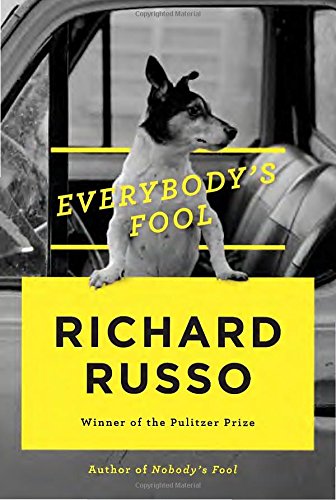
Book Review: "Everybody's Fool" by Richard Russo
Sequels make me nervous. If I'm reading books featuring a regular character or a planned series, that's one thing, but I always worry when an author releases a follow-up, particularly if it's a book I loved. And when the sequel comes a long time after the original, I'm even more wary, because I can't help but wonder if the author will be able to capture the same magic they did originally.
Needless to say, I had a lot of trepidation when I heard that Richard Russo had written a sequel to Nobody's Fool 23 years after the original was published. Not only is that one of my favorite books, but the 1994 film adaptation starring Paul Newman is a favorite as well. I believe Russo is one of the most talented writers around, but would he be able to make us care about the irascible Donald "Sully" Sullivan once again?
Yep, he did.
In the years since Nobody's Fool, Sully has achieved financial stability for probably the first time in his life, but everything else is still kind of screwed up. He's been told by his doctors at the VA that he has maybe 1-2 years to live if he doesn't have a cardiac procedure done, although there's no guarantee he'd survive the procedure. While the affair between him and Ruth, the married woman he has been carrying on with for years, has ended, they've maintained an easy companionshipuntil suddenly she doesn't want him around anymore. His son, Peter, is getting ready to move away once Sully's grandson goes to college, and Sully doesn't want to admit how much he'll miss him. And Rub, Sully's best friend and favorite object of his torment and teasing, is a little needier than usual lately.
But Sully isn't the only focus of Everybody's Fool, as he was in the first book. In fact, he takes a bit of a back seat to a host of other characters, particularly beleaguered police chief Doug Raymer, who is trying to figure out the identity of the man his wife was about to leave him for when she died in a freak accident, and just can't seem to catch a break otherwise; Mayor Gus Moynihan, whose plans for the city of North Bath don't seem to be coming to fruition, much like everything else in his life; Ruth, who is having trouble dealing with all of the people in her lifeSully, her husband, her daughter, and her ex-con son-in-law, who has just been released from prison yet again; and Sully's one-time nemesis, Carl Roebuck, who seems to be doing a good job of ruining himself.
Russo is in peak form as he navigates these stories, once again creating memorable, flawed characters you cannot get out of your mind. While I wish the book had spent more time on Sully again, as I believe he is the most interesting character of all, I didn't feel as if the book lost any strength when telling others' stories. These are funny, charming, sensitive, and at times, emotional people and their interactions with one another ignite the book like little firecrackers.
Everybody's Fool is the story of friendship, love, loss, fear, strength, and weakness. It's certainly a reflection on growing older and figuring out just what mark you're going to leave on the world, as well as the desire (at least in some) to correct the course their lives are on before it's too late. It's also a story of how we're haunted by the things we didn't do or say sometimes more than those we did.
Richard Russo once again proves he is a writer to be reckoned with, and a storyteller on a different plane from most of his contemporaries. He is a chronicler of the foibles and follies of the human spirit, and does so with humor and heart. While this book doesn't quite match Nobody's Fool, it's still pretty darned good. And now I wait for his next book...
Needless to say, I had a lot of trepidation when I heard that Richard Russo had written a sequel to Nobody's Fool 23 years after the original was published. Not only is that one of my favorite books, but the 1994 film adaptation starring Paul Newman is a favorite as well. I believe Russo is one of the most talented writers around, but would he be able to make us care about the irascible Donald "Sully" Sullivan once again?
Yep, he did.
In the years since Nobody's Fool, Sully has achieved financial stability for probably the first time in his life, but everything else is still kind of screwed up. He's been told by his doctors at the VA that he has maybe 1-2 years to live if he doesn't have a cardiac procedure done, although there's no guarantee he'd survive the procedure. While the affair between him and Ruth, the married woman he has been carrying on with for years, has ended, they've maintained an easy companionshipuntil suddenly she doesn't want him around anymore. His son, Peter, is getting ready to move away once Sully's grandson goes to college, and Sully doesn't want to admit how much he'll miss him. And Rub, Sully's best friend and favorite object of his torment and teasing, is a little needier than usual lately.
But Sully isn't the only focus of Everybody's Fool, as he was in the first book. In fact, he takes a bit of a back seat to a host of other characters, particularly beleaguered police chief Doug Raymer, who is trying to figure out the identity of the man his wife was about to leave him for when she died in a freak accident, and just can't seem to catch a break otherwise; Mayor Gus Moynihan, whose plans for the city of North Bath don't seem to be coming to fruition, much like everything else in his life; Ruth, who is having trouble dealing with all of the people in her lifeSully, her husband, her daughter, and her ex-con son-in-law, who has just been released from prison yet again; and Sully's one-time nemesis, Carl Roebuck, who seems to be doing a good job of ruining himself.
Russo is in peak form as he navigates these stories, once again creating memorable, flawed characters you cannot get out of your mind. While I wish the book had spent more time on Sully again, as I believe he is the most interesting character of all, I didn't feel as if the book lost any strength when telling others' stories. These are funny, charming, sensitive, and at times, emotional people and their interactions with one another ignite the book like little firecrackers.
Everybody's Fool is the story of friendship, love, loss, fear, strength, and weakness. It's certainly a reflection on growing older and figuring out just what mark you're going to leave on the world, as well as the desire (at least in some) to correct the course their lives are on before it's too late. It's also a story of how we're haunted by the things we didn't do or say sometimes more than those we did.
Richard Russo once again proves he is a writer to be reckoned with, and a storyteller on a different plane from most of his contemporaries. He is a chronicler of the foibles and follies of the human spirit, and does so with humor and heart. While this book doesn't quite match Nobody's Fool, it's still pretty darned good. And now I wait for his next book...
Labels:
book reviews,
fear,
fiction,
friendship,
ghosts,
grief,
growing old,
loss,
love,
marriage,
parenthood,
relationships,
scandal,
secrets
Saturday, May 7, 2016
Book Review: "Been Here All Along" by Sandy Hall
This was a sweet, heartwarming book I read in about 90 minutes. (File me under "People with no plans on Friday night.")
Gideon is smart, organized to a fault, always on time, and always is planning his next steps, which include running for class president and getting into a good college. His best friend Kyle is, in many ways, his complete oppositethe star basketball player, who doesn't like to read (or really even think about college), who's never on time for anything and is always a bit disorganized. But since the two have been friends since they were five, they share a lot, including a love for all things related to Lord of the Rings. (They even speak and write in Elvish at times.)
Gideon is prepared for everything, except the realization that he's fallen in love with his best friend, who happens to be dating Ruby, the head cheerleader. He doesn't want to jeopardize their friendship, so he does everything to convince himself why a relationship with Kyle could never work. But the heart knows differently than the brain.
Kyle feels pretty happy with his relationship with Ruby and his friendship with Gideon. Until both of them start acting weirdly, and Kyle wants to figure out what he did wrong.
Sandy Hall's Been Here All Along is an enjoyable look at how the boundaries between friendship and love can get blurry at times, and how the head and the heart sometimes want different things. It's also a look at the roadblocks we put up to protect ourselves, as well as the stupid mistakes we make when we let our emotions guide us.
This is completely predictable but really sweet. And as I read this book, I once again realized how far we've come in young adult fiction, that books like this exist for LGBT youth who might believe that living their truth might leave them branded "abnormal" or dooming them to life alone. The characters in this book behave the way you'd hope people would (and, in many cases, the way people do), and the crises the characters face aren't the typical melodramatic ones of homophobia, violence, and parental rejection, but the crises that many couples, gay or straight, have faced. (There's even a scenario I remember seeing Ross and Rachel deal with on Friends.)
Kudos to Sandy Hall for creating a book that I hope many kids will read, so they realize that living the life they choose is not only possible, it's acceptable.
NetGalley, Macmillan Children's Publishing Group, and Swoon Reads provided me an advance copy of the book in exchange for an unbiased review. Thanks for making this available!
Gideon is smart, organized to a fault, always on time, and always is planning his next steps, which include running for class president and getting into a good college. His best friend Kyle is, in many ways, his complete oppositethe star basketball player, who doesn't like to read (or really even think about college), who's never on time for anything and is always a bit disorganized. But since the two have been friends since they were five, they share a lot, including a love for all things related to Lord of the Rings. (They even speak and write in Elvish at times.)
Gideon is prepared for everything, except the realization that he's fallen in love with his best friend, who happens to be dating Ruby, the head cheerleader. He doesn't want to jeopardize their friendship, so he does everything to convince himself why a relationship with Kyle could never work. But the heart knows differently than the brain.
Kyle feels pretty happy with his relationship with Ruby and his friendship with Gideon. Until both of them start acting weirdly, and Kyle wants to figure out what he did wrong.
Sandy Hall's Been Here All Along is an enjoyable look at how the boundaries between friendship and love can get blurry at times, and how the head and the heart sometimes want different things. It's also a look at the roadblocks we put up to protect ourselves, as well as the stupid mistakes we make when we let our emotions guide us.
This is completely predictable but really sweet. And as I read this book, I once again realized how far we've come in young adult fiction, that books like this exist for LGBT youth who might believe that living their truth might leave them branded "abnormal" or dooming them to life alone. The characters in this book behave the way you'd hope people would (and, in many cases, the way people do), and the crises the characters face aren't the typical melodramatic ones of homophobia, violence, and parental rejection, but the crises that many couples, gay or straight, have faced. (There's even a scenario I remember seeing Ross and Rachel deal with on Friends.)
Kudos to Sandy Hall for creating a book that I hope many kids will read, so they realize that living the life they choose is not only possible, it's acceptable.
NetGalley, Macmillan Children's Publishing Group, and Swoon Reads provided me an advance copy of the book in exchange for an unbiased review. Thanks for making this available!
Friday, May 6, 2016
Book Review: "All the Missing Girls" by Megan Miranda
Yes. This is what a thriller should be.
Ten years ago Nicolette Farrell's best friend Corinne disappeared from their North Carolina hometown one night. No one could figure out what happened to Corinne, although the investigation brought a lot of people's secrets to light, and made everyone a suspectNic, her then-boyfriend Tyler, her brother, and Corinne's boyfriend, Jackson. It wasn't long before Nic left Cooley Ridge, getting rid of her accent and putting her old lifeand those in itbehind her.
You can never truly escape your hometown. Ten years after Corinne's disappearance, Nic returns to Cooley Ridge to help tie up some loose ends related to her ailing father, and get her childhood home into saleable condition. Since everyone else from her past still lives in Cooley Ridge, it's not long before she finds herself falling into familiar behavior patterns, revisiting old resentments, and picking at old wounds that she thought had healed.
One night shortly after Nic's return, another young woman, Annaleise Carter, disappears. Annaleise was one of Nic's neighbors, and was dating her ex-boyfriend Tyler, and although she was younger than Nic and her friends, she was there the night that events occurred leading up to Corinne's disappearance. And apparently, Annaleise had recently shown a keen interest into that night 10 years ago.
After the initial set-up, All the Missing Girls is told backwards, from Day 15 to Day 1 following Nic's return home. She tries to unravel what happened to Annaleise, and also attempts to understand what happened to Corinne all those years ago, and the hold she had on those around her. Nic also must come to terms with things she and her family have kept hidden, and try to figure out what the next chapter of her life holds, while everything seems to be unraveling quickly.
This book kept me hooked from start to finish. It reminded me of one of my favorite movies, Memento, which is also told backwards, and it's fascinating to see something referred to or see the aftermath of an event, and then read about what actually happened in the next (or technically, previous) chapter. Megan Miranda doesn't ease up on the tension, and I really wasn't sure what to expect. The plot is utterly fascinating even if it wasn't totally surprising to me, but all I wanted to do was keep reading.
I mentioned a few reviews ago that it's difficult for me to read mysteries and thrillers because I've become so used to not trusting any characters. In the introduction to the book, it is mentioned that none of the characters are reliable narrators, so that lack of trust actually works here and doesn't distract. It's just really well done.
For some reason the media marketing minds have decided to compare this to The Girl on the Train, but I don't think they're similar, and I think this one is better. I look forward to seeing what comes next for Megan Miranda, because her talent makes her totally worthy of being another famous Miranda (along with Hamilton genius Lin-Manuel Miranda).
NetGalley and Simon & Schuster provided me an advance copy of the book in exchange for an unbiased review. Thanks for making this available!
Ten years ago Nicolette Farrell's best friend Corinne disappeared from their North Carolina hometown one night. No one could figure out what happened to Corinne, although the investigation brought a lot of people's secrets to light, and made everyone a suspectNic, her then-boyfriend Tyler, her brother, and Corinne's boyfriend, Jackson. It wasn't long before Nic left Cooley Ridge, getting rid of her accent and putting her old lifeand those in itbehind her.
You can never truly escape your hometown. Ten years after Corinne's disappearance, Nic returns to Cooley Ridge to help tie up some loose ends related to her ailing father, and get her childhood home into saleable condition. Since everyone else from her past still lives in Cooley Ridge, it's not long before she finds herself falling into familiar behavior patterns, revisiting old resentments, and picking at old wounds that she thought had healed.
One night shortly after Nic's return, another young woman, Annaleise Carter, disappears. Annaleise was one of Nic's neighbors, and was dating her ex-boyfriend Tyler, and although she was younger than Nic and her friends, she was there the night that events occurred leading up to Corinne's disappearance. And apparently, Annaleise had recently shown a keen interest into that night 10 years ago.
After the initial set-up, All the Missing Girls is told backwards, from Day 15 to Day 1 following Nic's return home. She tries to unravel what happened to Annaleise, and also attempts to understand what happened to Corinne all those years ago, and the hold she had on those around her. Nic also must come to terms with things she and her family have kept hidden, and try to figure out what the next chapter of her life holds, while everything seems to be unraveling quickly.
This book kept me hooked from start to finish. It reminded me of one of my favorite movies, Memento, which is also told backwards, and it's fascinating to see something referred to or see the aftermath of an event, and then read about what actually happened in the next (or technically, previous) chapter. Megan Miranda doesn't ease up on the tension, and I really wasn't sure what to expect. The plot is utterly fascinating even if it wasn't totally surprising to me, but all I wanted to do was keep reading.
I mentioned a few reviews ago that it's difficult for me to read mysteries and thrillers because I've become so used to not trusting any characters. In the introduction to the book, it is mentioned that none of the characters are reliable narrators, so that lack of trust actually works here and doesn't distract. It's just really well done.
For some reason the media marketing minds have decided to compare this to The Girl on the Train, but I don't think they're similar, and I think this one is better. I look forward to seeing what comes next for Megan Miranda, because her talent makes her totally worthy of being another famous Miranda (along with Hamilton genius Lin-Manuel Miranda).
NetGalley and Simon & Schuster provided me an advance copy of the book in exchange for an unbiased review. Thanks for making this available!
Tuesday, May 3, 2016
Book Review: "We're All Damaged" by Matthew Norman
Matthew Norman aims for full-on Jonathan Tropper territory with his newest book, We're All Damaged. He doesn't quite hit that target, but the effort is still both funny and bittersweet.
"I don't have a problem with Applebee's per se. But I think we can all agree, as a civilized society, that lives shouldn't change there. Significant things should begin or end at Applebee's. You shouldn't walk into Applebee's as one thing and then leave as something else entirely."
When Andy Carter's wife ends their five-year marriage (at Applebee's), he is completely shocked, although he probably should have noticed the signs along the way. Their breakup throws Andy into a tailspin which results in him losing his job, ruining his best friend's wedding reception, and utterly crashing and burning. (At least the crashing part.) He flees his Omaha home for New York City, where he's the third-best bartender at a bar, removes himself from the social media grid, and he shares an apartment (at least sometimes) with Jeter, a cat with a nasty disposition.
But when Andy learns that his grandfather is dying, he must head back to Omaha, no matter how painful it all will be. And a lot has changedhis ex has moved in with her new boyfriend (a muscular paramedic named Tyler), his retired father spends his leisure time shooting squirrels with paintballs and defying the neighborhood rent-a-cop, and his conservative radio host mother is being courted by Fox News. Then there's also Daisy, the quirky stranger who is determined to make rebuilding Andy her latest project.
How do you pick yourself up again when your life as you know it has come crashing down? How do you save face in the wake of near-total public humiliation? And how do you keep from dwelling on all that has gone wrong, so you can focus on what is going right?
I really enjoyed We're All Damaged, even when I felt it tried a little too hard to be funny and edgy. I like the way Norman writes and he really created a motley crew of characters with both positive and negative attributes that (for the most part) were fun to read about. I thought a subplot involving the "Glitter Mafia" and marriage equality was unnecessary, and threw the book off track for me every time it came up, although I understand why Norman included it.
This book read a little bit like a movie and it definitely made me laugh from time to time. I think many of us have had some of the same feelings Andy has, although hopefully we've not had to experience the kind of outrageous incidents he did! A fun one to pick up...
Kindle First and Little A provided me an advance copy of the book in exchange for an unbiased review. Thanks for making this available!
"I don't have a problem with Applebee's per se. But I think we can all agree, as a civilized society, that lives shouldn't change there. Significant things should begin or end at Applebee's. You shouldn't walk into Applebee's as one thing and then leave as something else entirely."
When Andy Carter's wife ends their five-year marriage (at Applebee's), he is completely shocked, although he probably should have noticed the signs along the way. Their breakup throws Andy into a tailspin which results in him losing his job, ruining his best friend's wedding reception, and utterly crashing and burning. (At least the crashing part.) He flees his Omaha home for New York City, where he's the third-best bartender at a bar, removes himself from the social media grid, and he shares an apartment (at least sometimes) with Jeter, a cat with a nasty disposition.
But when Andy learns that his grandfather is dying, he must head back to Omaha, no matter how painful it all will be. And a lot has changedhis ex has moved in with her new boyfriend (a muscular paramedic named Tyler), his retired father spends his leisure time shooting squirrels with paintballs and defying the neighborhood rent-a-cop, and his conservative radio host mother is being courted by Fox News. Then there's also Daisy, the quirky stranger who is determined to make rebuilding Andy her latest project.
How do you pick yourself up again when your life as you know it has come crashing down? How do you save face in the wake of near-total public humiliation? And how do you keep from dwelling on all that has gone wrong, so you can focus on what is going right?
I really enjoyed We're All Damaged, even when I felt it tried a little too hard to be funny and edgy. I like the way Norman writes and he really created a motley crew of characters with both positive and negative attributes that (for the most part) were fun to read about. I thought a subplot involving the "Glitter Mafia" and marriage equality was unnecessary, and threw the book off track for me every time it came up, although I understand why Norman included it.
This book read a little bit like a movie and it definitely made me laugh from time to time. I think many of us have had some of the same feelings Andy has, although hopefully we've not had to experience the kind of outrageous incidents he did! A fun one to pick up...
Kindle First and Little A provided me an advance copy of the book in exchange for an unbiased review. Thanks for making this available!
Labels:
book reviews,
divorce,
fame,
family,
fiction,
friendship,
gossip,
grief,
growing old,
growing up,
loneliness,
love,
nostalgia,
relationships
Monday, May 2, 2016
Book Review: "Happy Family" by Tracy Barone
Cheri Matzner's life is in a bit of turmoil. She and her filmmaker husband are barely speaking yet she's trying to have a baby, her job as a professor of comparative religions is in jeopardy (but all she really wants is a spot on a crew slated to head to Iraq to catalog and translate antiquities), and she's trying to keep her overbearing, functionally alcoholic mother from throwing her a 40th birthday party.
But Cheri is used to chaos in her life, as she has reinvented herself more times than she can count, from the suburban adolescent to the multiple-pierced, blue-haired teenager, from the slightly radical Yale student to the tough-as-nails cop entangled in a relationship with her partner. Part of her restlessness seems innate to her, but she'll admit some of her transformations have simply been ways of angering her adoptive parentsher well-meaning but emotionally distant father and her smothering, insecure mother. She's never really understood why her parents treated her the way they always have, but while she's tried to shrug it off for most of her life, they've affected her more than she cares to admit.
A series of professional and personal setbacks make Cheri question everythingher marriage, her maternal instincts, her career path, and her family. She reflects upon her life growing up as some sort of symbol to both of her parents (something different to each of them), and wonders how much of this is attributable to her adoption as an infant. But more than that, Cheri realizes that it can take a significant amount of time before you really understand your parents and yourself, and sometimes your lowest moments are what you need to really change your life.
Tracy Barone's Happy Family is an emotional and sometimes humorous book about how growing up in the midst of dysfunction can only prepare you for more dysfunction in adulthood. It's also a book about finding strength in difficult times, and how life has a way of surprising you, both positively and negatively. The description of the book led me to believe it would be more about Cheri's birth mother and the foster family that took her in when she was an infant, but their impact is felt only briefly at the start and end.
Barone is a tremendously talented writer, and I found myself so wrapped up in the plot of the book that I honestly didn't realize how good she was until I read a paragraph near the end of the book which made me gasp. I re-read that and then started noticing Barone's almost-poetic style in some places. Cheri is a fascinating, flawed character; this is her book, and some of the other characters paled in comparison to her. (Cheri's mother almost never transcended a stereotypical Italian immigrant, clinging fast to her old-school ways and customs despite being in the U.S. for many years.)
Happy Family is a sensitive and occasionally sexy portrait of a woman who always believed her life was more together than it actually is. If you've ever wondered whether why you are the way you are has more to do with your upbringing than your own choices, this is definitely a book you'll enjoy. Barone's writing ability is definitely worth taking notice of.
NetGalley and Little, Brown and Company provided me an advance copy of the book in exchange for an unbiased review. Thanks for making this available!
But Cheri is used to chaos in her life, as she has reinvented herself more times than she can count, from the suburban adolescent to the multiple-pierced, blue-haired teenager, from the slightly radical Yale student to the tough-as-nails cop entangled in a relationship with her partner. Part of her restlessness seems innate to her, but she'll admit some of her transformations have simply been ways of angering her adoptive parentsher well-meaning but emotionally distant father and her smothering, insecure mother. She's never really understood why her parents treated her the way they always have, but while she's tried to shrug it off for most of her life, they've affected her more than she cares to admit.
A series of professional and personal setbacks make Cheri question everythingher marriage, her maternal instincts, her career path, and her family. She reflects upon her life growing up as some sort of symbol to both of her parents (something different to each of them), and wonders how much of this is attributable to her adoption as an infant. But more than that, Cheri realizes that it can take a significant amount of time before you really understand your parents and yourself, and sometimes your lowest moments are what you need to really change your life.
Tracy Barone's Happy Family is an emotional and sometimes humorous book about how growing up in the midst of dysfunction can only prepare you for more dysfunction in adulthood. It's also a book about finding strength in difficult times, and how life has a way of surprising you, both positively and negatively. The description of the book led me to believe it would be more about Cheri's birth mother and the foster family that took her in when she was an infant, but their impact is felt only briefly at the start and end.
Barone is a tremendously talented writer, and I found myself so wrapped up in the plot of the book that I honestly didn't realize how good she was until I read a paragraph near the end of the book which made me gasp. I re-read that and then started noticing Barone's almost-poetic style in some places. Cheri is a fascinating, flawed character; this is her book, and some of the other characters paled in comparison to her. (Cheri's mother almost never transcended a stereotypical Italian immigrant, clinging fast to her old-school ways and customs despite being in the U.S. for many years.)
Happy Family is a sensitive and occasionally sexy portrait of a woman who always believed her life was more together than it actually is. If you've ever wondered whether why you are the way you are has more to do with your upbringing than your own choices, this is definitely a book you'll enjoy. Barone's writing ability is definitely worth taking notice of.
NetGalley and Little, Brown and Company provided me an advance copy of the book in exchange for an unbiased review. Thanks for making this available!
Labels:
book reviews,
childhood,
family,
fiction,
growing up,
loss,
love,
parenthood,
relationships,
religion,
sex
Subscribe to:
Posts (Atom)


